Published: November 13, 2026
Our sample electric bill went up $27.56 from the same month last year, a 17% jump. The sample household actually used a little less electricity per day. Nothing broke, nobody left a space heater running, and nothing on the bill was wrong. Two lines most people never look at explain the whole increase: the number of days in the billing period, and the price per kilowatt-hour.
That is the case for learning to read your electric bill. Most of the time the total is correct and the reason it moved is sitting in plain sight. Some of the time it is not correct, or not the best deal you are entitled to, and the clues are in the same few lines.
This guide walks through a sample bill line by line, shows the math behind that $27.56, and then lists the charges worth questioning and how to question them. Once you know where to look, it takes a few minutes a month.
Key Takeaways
- Most electric bills split into two halves: supply (the electricity itself) and delivery (the poles, wires, meter and billing). In many states you can shop for supply. Delivery goes to your local utility either way.
- Before reacting to the total, check the billing period. A 32-day bill is not comparable to a 29-day bill.
- Divide the total by the kilowatt-hours used. That all-in price is the number to track month to month and year to year. To compare suppliers, use the supply rate instead.
- An “estimated” read is a guess. A string of low estimates can build up into a large catch-up bill later; high ones come back as a credit.
- Worth questioning: repeated estimated reads, a supplier you don’t recognize or a rate that jumped after a contract ended, a rate class that doesn’t fit your household, a meter number that isn’t your meter, and any charge you can’t match to anything.
- Call the utility first and write down the reference number. If it isn’t resolved, your state utility commission takes complaints for free.
What Your Electric Bill Is Actually Charging You For
Strip away the logos and the usage charts and most residential electric bills in the U.S. charge for two things, even when the layout doesn’t show the split clearly.
Supply is the electricity itself, priced per kilowatt-hour (kWh). Depending on your state, it comes either from your local utility or from a competitive supplier you chose, or one that signed you up.
Delivery is everything that gets that electricity to your outlets: transmission lines, local wires and transformers, the meter, and the billing itself. Part of it is a fixed monthly customer charge you pay even if you use nothing; the rest is usually billed per kWh. Delivery goes to your local utility. For investor-owned utilities, state regulators set those rates; city-owned utilities and electric co-ops often set their own.
The Massachusetts Department of Public Utilities gives a clean example in its guide to understanding your electric bill. A household using about 600 kWh a month, paying 16 cents per kWh for delivery and 15 cents for supply, plus a $10 customer charge, gets a $196 bill. Only the $90 supply portion can be shopped, and only where your state allows it. The $106 for delivery goes to the local utility no matter who supplies the power, and using less shrinks only its per-kWh part. The $10 customer charge stays the same.
That split matters more than anything else on this page. When a supplier quotes you a price, it is quoting only the supply half. When your total jumps, the first question is which half moved.
$144 — the average U.S. residential electric bill per month in 2024, according to the U.S. Energy Information Administration, which also reported average use of 865 kWh a month and an average price of 16.5 cents per kWh.
How to Read Your Electric Bill, Line by Line
Layouts differ by utility, so we built a sample bill from round, realistic numbers to show where each piece usually lives. Your bill will name things differently, but the same lines are almost always there.
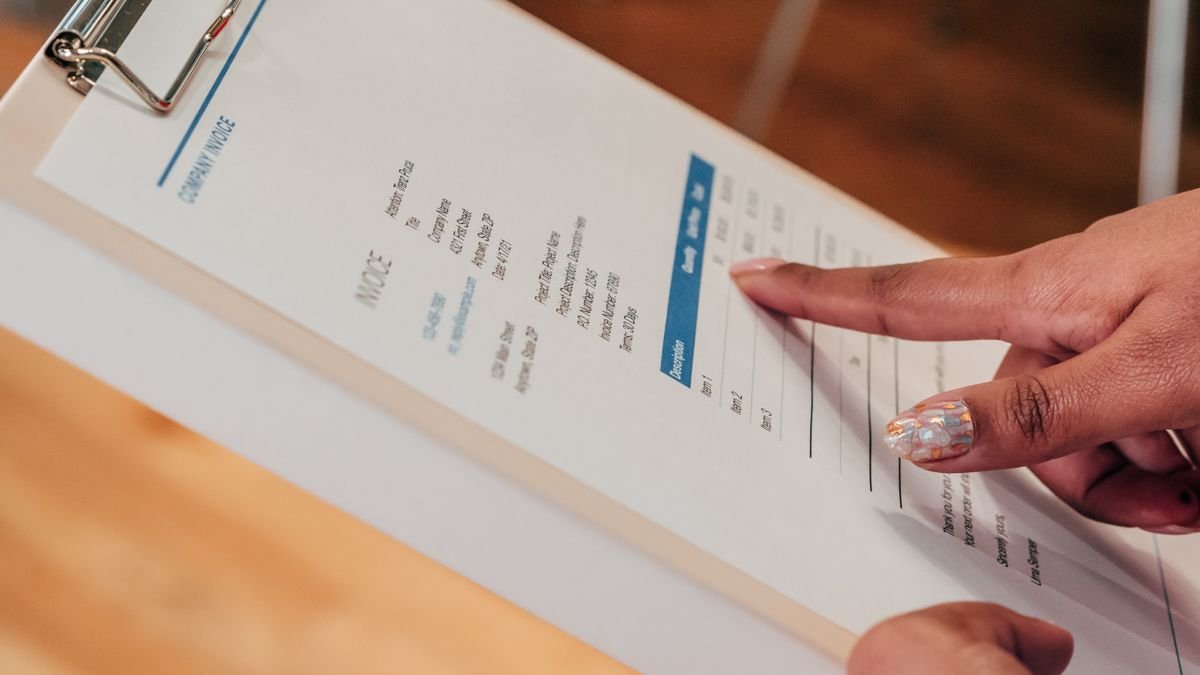
| Line on the bill | Our sample |
|---|---|
| Billing period | Oct 2 to Nov 3 (32 days) |
| Read type | Actual |
| Meter readings | 48,211 to 49,123 = 912 kWh |
| Rate | Residential Service |
| Customer charge (delivery) | $12.00 |
| Distribution, 912 kWh x 8.20 cents (delivery) | $74.78 |
| Generation supply, 912 kWh x 10.50 cents (supply) | $95.76 |
| Taxes and surcharges | $7.42 |
| Total | $189.96 |
| Same month last year | 29 days, 840 kWh, $162.40 |
1. Start with the billing period, not the total.
Billing periods are not calendar months. Ours ran 32 days; last year’s ran 29. Three extra days of electricity will raise any bill, and they say nothing about how your household behaved. Divide usage by days to get kWh per day: 912 divided by 32 is 28.5 this year, against 840 divided by 29, or about 29.0, last year.
2. Check whether the reading was actual or estimated.
Somewhere near the meter readings, the bill will say whether the reading was actual or estimated, sometimes as a single letter (A or E). An estimate is the utility’s guess at your usage, usually based on your history. The next actual reading corrects it, up or down. One estimate is routine. Several in a row deserve attention, because the correction arrives all at once.
3. Find your rate class or rate schedule.
This is the tariff you are billed under: a code like “RS,” “R-1,” or “Residential Service.” It decides which prices apply to you. It also shows whether you are on a time-of-use plan, an electric-heat rate, or a discounted rate for income-qualified households, if your utility offers one.
4. Separate supply from delivery.
Your bill will group the lines, though not always under those exact words. Supply may be labeled “generation,” “energy,” or “basic service.” Delivery may show up as “distribution,” “transmission,” and “customer charge.” In our sample, supply is $95.76 and delivery is $86.78 ($12.00 plus $74.78), with taxes on top. If a competitive supplier provides your electricity, its name appears in the supply section, often with its own phone number.
5. Divide the total by your kWh.
$189.96 divided by 912 kWh is about 20.8 cents per kWh, all in. This is the number that tells you what electricity actually costs your household, including fixed charges and taxes. Do the same for last year’s bill: $162.40 divided by 840 kWh is about 19.3 cents. Our all-in price rose about 1.5 cents per kWh.
This is the number to track over time. It is not the number to hold up against a supplier’s offer, because it includes delivery, fixed charges and taxes; compare a supplier’s price with your supply rate instead.
6. Compare with the same month last year.
Most bills include a 12- or 13-month usage chart, and many print last year’s same-month usage in a small box. Compare like with like. October against last October tells you something. October against August mostly tells you it was hotter in August.
Why Our Sample Bill Rose $27.56
Put steps 1, 5 and 6 together and the increase stops being a mystery:
- About $16.80 came from the three extra days in the billing period.
- About $13.64 came from the higher all-in price per kWh.
- About $2.88 came back off, because the household actually used slightly less per day (28.5 kWh against about 29.0).
Those three add up to the $27.56 difference. The household did nothing wrong. It also learned two useful things: its electricity got more expensive, which is worth checking against what its supply rate should be, and its habits are holding steady.
The bill tells you what happened. The billing period and the all-in price tell you why. Check those two before you assume someone is overcharging you, or that your family suddenly started wasting power.
Charges Worth Questioning
A surprising total is not proof of an error. Most of the time it comes down to days, price or weather. But a few things are worth a phone call when they show up unexpectedly or you can’t explain them.
7. Several estimated reads in a row.
Estimates are allowed, within limits that vary by state. Pennsylvania’s rules, for example, let a monthly-billing utility estimate every other month as long as customers can submit their own readings. When the utility can’t get access to a meter, it still has to get an actual or customer-supplied reading at least every six months, and an actual reading at least once every 12 months, under 52 Pa. Code § 56.12. The longer estimates run, the bigger the correction can be when a real reading lands: a catch-up charge if the estimates ran low, a credit if they ran high. If you see “estimated” twice running, read the meter yourself, photograph it with the date, and ask the utility to bill from your reading and when its next actual reading is scheduled.
8. A supplier you don’t recognize, or a rate that jumped.
In states with retail choice, a supplier’s name on your bill means it is providing your electricity. If you never chose one, call the utility and ask how you were enrolled. If you did choose one, check the billed rate against your contract, including when it ends, whether the rate can change, and any monthly or cancellation fees. On Pennsylvania’s official shopping site, PAPowerSwitch, the state utility commission warns that when a fixed-rate contract expires, your rate may change to a monthly variable rate unless you act before the expiration date.
In Pennsylvania the benchmark is called the “price to compare“: the price per kWh your utility itself charges for supply, and the number any supplier offer has to beat. Other choice states use different names for the same idea, so look for your utility’s default supply rate and your state’s official shopping site. Compare contract length, fees and whether the rate can change, not just the cents per kWh.
9. A rate class that no longer fits your household.
A rate class set years ago may not match how you live now. Some utilities have lower residential rates for income-qualified households; Massachusetts utilities, for example, offer discounted rates (rate codes like R-2) to customers who receive certain public benefits. Others have separate rates for homes with electric heat, or time-of-use plans that reward moving laundry and dishwashing to off-peak hours. Your utility’s website lists its residential rates. If one looks like a better fit, ask the utility whether you qualify, what it needs from you, and whether switching would actually lower your bill at your usage. Eligibility rules vary by utility.
10. A meter number that isn’t your meter.
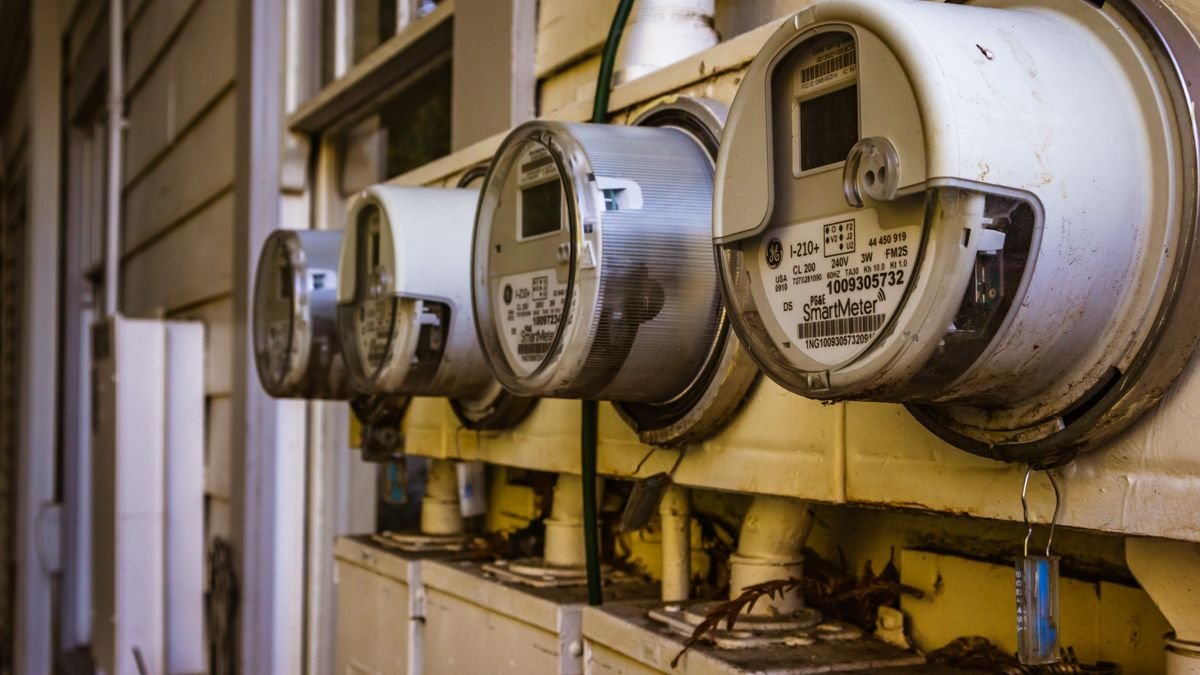
The meter number on the bill should match the number printed on your meter. It is a two-minute check, and in apartments, duplexes and converted houses with several meters side by side, it is worth doing once. A crossed meter can mean you are paying for a neighbor’s usage, or they for yours.
11. Any charge you can’t match to anything.
Late fees on a bill you paid on time. A deposit or reconnection fee you were never told about. A previous balance that doesn’t reflect your last payment. A “miscellaneous” line with no explanation. Utilities make mistakes like any business, and these are the easiest to fix because you can usually prove them with a bank statement.
How to Question a Charge Without Starting a Fight
Start with the utility. Most state commissions expect it: the Pennsylvania Public Utility Commission, for example, says you must contact the utility before filing a complaint for most problems.
- Have the bill, your account number and any photos of the meter in front of you before you call.
- Ask a specific question rather than saying “my bill is too high.” For example: “My last two readings were estimated. Can you bill me from this actual reading instead?” or “Who enrolled me with this supplier, and when?”
- Ask for a re-read or a meter test if the usage doesn’t make sense. Ask first whether there is a fee, because some utilities charge for an extra reading or a test.
- Write down the date, the representative’s name and the reference number.
- Keep paying the part of the bill you don’t dispute. Pennsylvania’s rules (52 Pa. Code § 56.181), for example, require a disputing customer to pay the undisputed portion while the dispute is pending, and require any overpayment that turns up to be refunded with interest. Elsewhere, ask the utility or your state commission what you must pay while a charge is under review.
If the utility doesn’t resolve it, your state’s public utility or public service commission handles consumer complaints, usually through a simple informal process that costs nothing. The National Association of Regulatory Utility Commissioners keeps a list of every state commission. One exception to know: city-owned utilities and rural electric cooperatives often answer to their own boards rather than the state commission, though this varies by state. If the commission says it can’t take your complaint, ask the provider who oversees it. In Pennsylvania, for example, the PUC directs complaints about those to the provider itself or to the state’s rural electric association.
If the Bill Is Right but Hard to Pay
Sometimes the reading is accurate, the rate is right, and the bill is still more than the month can carry. Two things are worth knowing before winter.
Budget billing spreads your expected annual cost evenly across the year, so January doesn’t arrive as a shock. In Pennsylvania, electric and gas utilities must offer it as an option to residential customers, with enrollment open year-round. Many utilities elsewhere offer it too. It doesn’t lower what you pay in a year; it smooths it, and there is usually a settle-up at the end of the plan year.
The Low Income Home Energy Assistance Program (LIHEAP) helps eligible households pay heating and cooling bills. Each state runs its own program, with its own application periods and funding. The federal LIHEAP office lists a free National Energy Assistance Referral line, 1-866-674-6327, that can point you to the office for your area.
If you are already behind on several bills at once, When You Can’t Pay Every Bill: Which Bills to Pay First covers how utilities fit into that order.
If Your Bill Also Includes Gas
Many households get one bill for electricity and natural gas. The gas half follows the same logic. It is measured in therms (or in hundreds of cubic feet, written Ccf), it carries its own fixed customer charge, and it splits into supply and delivery just like electricity. The Massachusetts Department of Public Utilities’ guide to understanding your gas bill walks through each line.
The same checks apply: billing days, actual or estimated reads, rate class, and the all-in price per therm. Gas-heated homes will see the gas half dominate the winter bill, which is where How to Lower Your Heating Bill picks up.
If You Rent
If the electric account is in your name, everything above applies to you directly. You can call the utility, shop for supply where your state allows it, and file a complaint.
If your landlord pays the utility and bills you a share, you are not the utility’s customer. Ask your landlord how your share is calculated and for a copy of the bill it comes from. Rules for how landlords can divide and charge for utilities vary by state and city, and your lease should say how it works.
Your Monthly Bill-Review Checklist
| Check | Where on the bill | What to do if it looks off |
|---|---|---|
| Billing period | Near the top, “service from/to” | Compare kWh per day, not monthly totals |
| Read type | Next to the meter readings | Two or more in a row: photograph the meter, ask when an actual read is due |
| Meter number | Meter readings section | Match it to the number on your meter once |
| Rate class | Account details | Compare with your utility’s residential rate options |
| Supplier name | Supply or generation section | Never chose one? Call the utility. Did? Check the contract rate and end date |
| All-in price per kWh | Total divided by kWh | Rising? Check which half moved, supply or delivery |
| Same month last year | Usage chart or comparison box | Compare per day, not per bill |
| Fees and balances | Account summary | Match each one to a payment or an event |
More Worth Knowing
Once you know your all-in price per kWh, The DIY Home Energy Audit: What to Check, and What Not to Bother With shows where a household’s usage usually goes.
If electric heat or a heat pump drives your winter bill, How to Lower Your Heating Bill (It Depends on How You Heat) sorts the fixes by heating type.
Summer spikes have their own causes. How to Save Money on Utility Bills This Summer covers the cooling side.
If the problem is a price rather than an error, How to Negotiate Lower Bills (Internet, Phone, Insurance) has scripts for the services where asking actually works.
Water bills have their own quirks, including a sewer charge that can be set by winter usage. How to Cut Your Water Bill Without a Renovation explains it.
Frequently Asked Questions
What’s the fastest way to read your electric bill each month?
Check four things in order: the number of days in the billing period, whether the reading was actual or estimated, the total divided by kWh used, and usage per day against the same month last year. That takes a few minutes and explains most changes.
What is the difference between supply and delivery charges?
Supply is the cost of the electricity itself. Delivery covers getting it to your home: transmission, local wires, the meter and billing, including a fixed monthly customer charge. In states with retail choice you can shop for supply, but delivery stays with your local utility.
Why is my electric bill so high this month when I didn’t use more?
Check the billing period first, since a longer period means a bigger bill. Then check whether the rate changed, and whether last month’s reading was estimated low and this month’s actual reading caught up.
What does “estimated reading” mean on an electric bill?
The utility didn’t get an actual reading from your meter and billed you from a calculation, usually based on your past usage. The next actual reading corrects any difference, so a long run of low estimates can end in a large catch-up bill.
Who do I complain to if the utility won’t fix my bill?
Your state’s public utility or public service commission. Most require you to contact the utility first, then accept informal complaints for free. City-owned utilities and electric co-ops may fall outside the commission’s authority.
The Bottom Line
Your electric bill is not a verdict on your household. It is a calculation, and you can check the inputs. Look at the billing days and the all-in price before you panic or blame the kids. Question the things that don’t add up: a string of estimates, a supplier or rate you didn’t agree to, a meter that isn’t yours, a fee you can’t place. Call the utility first, keep a record, keep paying the part you don’t dispute, and take it to your state commission if you need to.
In short: check the days and the price per kWh before the total, and call about anything you can’t match to something real.
Want more tips like these delivered to your inbox? Sign up below — you’ll also get our free grocery budget worksheet, and we only send stuff that’s actually useful.