Published: November 11, 2026
From 2024 through June 2025, State Farm paid more than $628 million on frozen-pipe and winter water claims. The average payment was more than $30,000. Those claims cover water damage caused by freezing, from split pipes to cracked foundations and slabs. That is the bill winter home maintenance is really there to prevent.
Here is the part that should change how you spend a free Saturday this month: the steps that prevent most of that damage cost little or nothing. Closing one valve. Draining one faucet. Knowing where the main shutoff is before water is coming through the ceiling.
Most winter home maintenance checklists list a dozen or more chores and give them equal weight, as if wiping down the patio furniture and protecting the water lines were the same size of job. They are not. We sorted the season’s jobs by the size of the bill each one prevents, then split them three ways: what you can check yourself in an afternoon, what is worth paying a professional for, and what you can skip, even when someone is selling it to you. If you rent, there is a section for you. If your winters are mild, there is a section on what still applies.
Key Takeaways
- Water is the expensive winter risk. State Farm’s average frozen-pipe claim payment passed $30,000 for claims from 2024 through mid-2025.
- The three cheapest protections: know where your main water shutoff is, drain the outdoor faucets, and insulate pipes in unheated spaces.
- Two jobs are worth paying for: an inspection of any fuel-burning furnace, boiler, stove or fireplace before the season, and an annual chimney or flue inspection.
- After heavy snow, clear the outside vents for your furnace, fireplace and dryer. A blocked vent can push carbon monoxide back indoors.
- Skip routine air duct cleaning. The EPA recommends it only when there is visible mold, pests, or heavy debris.
- Turning the heat way down while you travel is a false saving. The Red Cross says to leave it at no lower than 55°F.
First, Rank the Jobs by the Bill They Prevent
A winter can cost a household in three ways: water damage from a frozen pipe or a leaking roof edge, fire and carbon monoxide from heating equipment, and a heating bill that runs higher than it needs to until spring. The first two do not happen to most homes in a given year, but when they do, the bill is large, and the second is measured in more than dollars.
That third bill already has its own guides on this site. How to Lower Your Heating Bill works through it by heating type, and The DIY Home Energy Audit covers drafts, attic leaks and the dryer vent. This guide stays with the first two, because those are the ones where a small job in November prevents a large bill in February.
Water First: Protect the Pipes
1. Find the main water shutoff, and make sure it turns.
If a pipe bursts, State Farm says to shut off the main water valve and leave the faucets open, and to know where that valve is before an emergency. A small crack, the insurer says, can release more than 250 gallons of water a day.
250+ gallons a day — how much water State Farm says a small crack in a pipe can release.
It is usually where the water line enters the house: a basement wall, a crawl space, a utility closet, sometimes near the water heater. Turn it off and back on to make sure it moves. A valve nobody has touched in fifteen years can be stiff, and a dry afternoon is the time to find out. Tag it, and show everyone in the house who is old enough to use it.
If it will not budge, do not force it with a long wrench. A valve that breaks in your hand becomes a plumbing call either way, and a scheduled visit in November is a far better day than an emergency one in January. If water is already escaping and the valve will not close, call an emergency plumber rather than forcing it.
2. Shut off, drain and open the outdoor faucets.
Outdoor hose faucets, pool supply lines and sprinkler lines are the first pipes the American Red Cross lists among the ones that freeze most often. Its routine for the hose faucets is short:
- Remove, drain and store the hoses.
- Close the inside valve that feeds each outdoor faucet.
- Open the outdoor faucet to let it drain, and leave it open, so any water left in the pipe has room to expand without splitting it.
Drain sprinkler and pool lines following the manufacturer’s or installer’s directions (if your sprinkler system has an above-ground backflow preventer, the brass fitting where the system meets the house line, it is part of that job), and do not add antifreeze to them unless those directions call for it. The Red Cross warns that antifreeze is environmentally harmful and dangerous to people, pets, wildlife and landscaping.
3. Insulate the pipes that run through cold spaces.
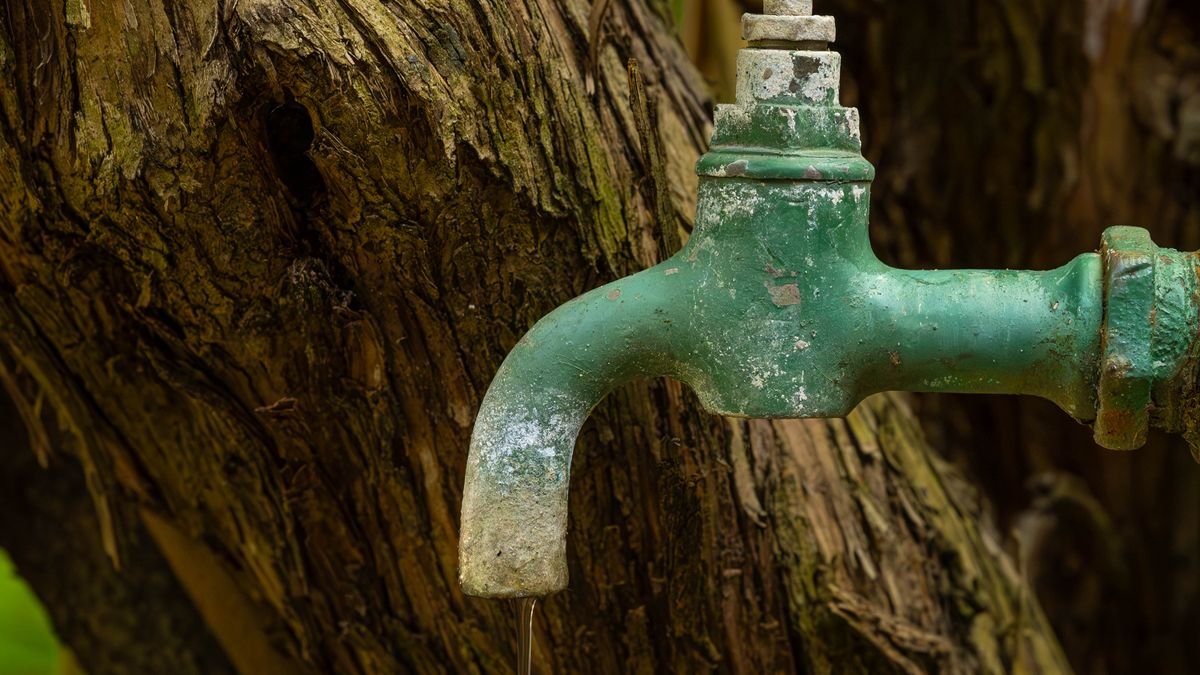
According to State Farm, the pipes most at risk are the ones in uninsulated areas such as attics, crawl spaces and exterior walls, especially once temperatures drop below 20°F. The Red Cross adds garages and the cabinets under kitchen and bathroom sinks, and says both hot and cold pipes in those spots should be insulated.
Foam pipe sleeves are the plain, inexpensive fix, and they go on by hand. For exposed pipes the Red Cross also lists UL-listed heat tape or heat cable. Those are electrical products: use one made for your pipe type, follow its instructions exactly, and hire an electrician or plumber if the installation is beyond you. Take a flashlight to the basement, the crawl space and the garage, and look for any run of pipe along an outside wall. That is your list.
4. Learn the cold-night routine before the cold night.
When a hard freeze is forecast, the Red Cross recommends three things, all free:
- Let cold water drip from any faucet fed by exposed pipes. Moving water is harder to freeze.
- Open the cabinet doors under kitchen and bathroom sinks so warm room air reaches the pipes. Move cleaning products out of children’s reach first.
- Keep the thermostat at the same temperature day and night.
That last one cuts against the usual advice to turn the heat down overnight, which our heating guide recommends for furnaces and boilers. During a deep cold snap, the Red Cross’s trade-off is the right one: a few nights of a higher heating bill against water damage that, going by State Farm’s average claim payment, can cost far more. When the snap breaks, go back to your normal schedule.
If a faucet gives you only a trickle on a frigid morning, suspect a frozen pipe. Keep that faucet open and warm the pipe with a hair dryer, an electric heating pad or towels soaked in hot water. Never use a torch or any other open flame, and keep electrical appliances and cords away from standing water or wet surfaces. If you cannot find the frozen section or cannot reach it safely, call a licensed plumber.
The Roof Edge: Gutters and Ice Dams
5. Clean the gutters after the leaves fall, and hire it out when the ladder work is risky.
Clogged gutters hold water at the roof edge, which is where winter roof trouble starts. Cleaning them once the trees are bare is the job. Whether you do it yourself is mostly a question of height and footing.
On a one-story house with level ground and a ladder you can set securely, many people do this themselves. Even then, it is not a job for everyone: if the ground is uneven, power lines run nearby, or you are uneasy at height, hire an insured professional, and never lean out past the ladder or climb onto the roof. On two stories, it is the clearest hire-out on this list. Angi’s 2026 cost data puts professional gutter cleaning at $119 to $234 for a single-story home, with a national average of $168 across more than 37,000 projects, and roughly $180 to $360 for two stories. That is a modest price for not standing near the top of a ladder in November.
While you are out there, check that each downspout drops its water well away from the foundation. If someone at the door pitches gutter guards as the end of gutter cleaning, know that Angi’s own cost guide says guards reduce debris but do not eliminate it; you will still clean them, just less often.
6. Treat icicles as a warning, not the problem.
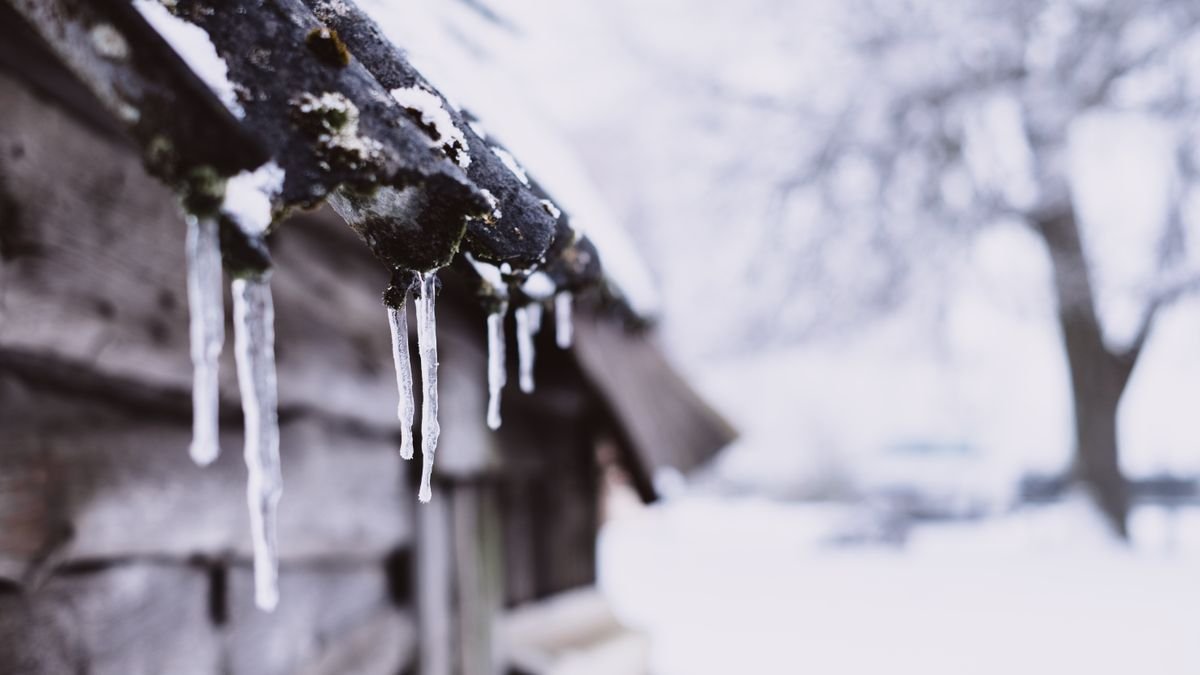
An ice dam is the ridge of ice that builds along the edge of a roof and holds back meltwater, which can then work its way under the shingles and into the attic or down the inside of the walls. The Insurance Institute for Business & Home Safety (IBHS) explains how it forms: heat from the house rises into the attic, warms the roof, and melts snow from underneath. The water runs down to the colder roof edge and refreezes, again and again.
That is why the lasting fixes are in the attic, not on the roof: ventilation, more insulation, and sealing the openings that let warm air up there. Our DIY home energy audit shows where to look. Adding insulation or reworking ventilation is often a job for a professional.
For this winter, the safe short-term step is to pull heavy snow off the lower part of the roof with a roof rake, from the ground. IBHS suggests a rake with wheels so the blade does not scrape the shingles, warns you to stay clear of where power lines enter the house, and names the alternative: a licensed, insured professional. State Farm’s advice is blunter: never climb on the roof.
Heating Safety: The Jobs Worth Paying For
7. Have fuel-burning equipment inspected before the season.
The EPA recommends that a fuel-burning furnace, stove or fireplace be inspected and serviced before each heating season, specifically to protect against carbon monoxide poisoning. The same reasoning covers a gas or oil boiler or water heater. If you heat with gas, oil, propane or wood, this is a professional job and worth the visit. Our heating bill guide covers why to book it before the cold arrives rather than during it.
The chimney or flue gets its own check, and not only if you burn wood. The Chimney Safety Institute of America follows the National Fire Protection Association’s standard, which says chimneys, fireplaces and vents should be inspected at least once a year, with cleaning and repairs done if necessary. An inspection is yearly; a sweep is only when the inspection finds buildup. CSIA applies the yearly check to gas furnace flues too, since a bird’s nest can block one as easily as a wood flue.
Angi’s 2026 data puts a chimney sweep at $129 to $381, averaging $254, and gas fireplace maintenance at $80 to $130. Sweeps are busiest in late summer and fall, so booking in spring or summer can cost less next year.
After a heavy snow, walk outside and look at the vents. The U.S. Fire Administration says to make sure the vents for your furnace, stove, fireplace and dryer are clear of snow and debris. A blocked vent can push exhaust, including carbon monoxide, back into the house. Clear them from the ground with a broom or a gloved hand. Do not take venting apart or climb onto an icy roof to reach one.
8. Test the alarms, and change the filter.
These two take minutes and need no professional.
The Consumer Product Safety Commission recommends carbon monoxide alarms on every level of the home and outside sleeping areas, but not in attics or basements unless someone sleeps there. Smoke alarms belong on every level, outside sleeping areas and inside each bedroom. Test both monthly and replace the batteries once a year. Alarms with sealed 10-year batteries are the exception: follow the maker’s instructions and replace the whole unit when it says to. If you have fuel-burning equipment and no CO alarm, this is the one thing in this guide worth buying today.
For a forced-air system, the EPA’s advice is to change the filter regularly, more often if it clogs, using the highest-efficiency filter your system’s manufacturer recommends.
What to Skip, and One Saving That Isn’t
9. Skip routine air duct cleaning.
Duct cleaning is sold hard every fall. The EPA’s position is that it does not recommend cleaning air ducts routinely, only as needed, and that duct cleaning has never been shown to actually prevent health problems. It names three situations where cleaning does make sense: substantial visible mold inside hard ducts or on other parts of the system, ducts infested with rodents or insects, and ducts so clogged that particles come out of the supply registers.
If no one in the household has allergies or unexplained symptoms, and a look inside the ducts shows no mold or heavy dust, the EPA says cleaning is probably unnecessary. It also advises against hiring anyone who recommends duct cleaning as a routine part of maintenance. Be wary of add-on chemical biocides or duct “sealants” too; the EPA says research has not shown they work.
10. Do not count on heat cables to cure ice dams.
Roof and gutter heat cables have a real but narrow use. IBHS says professionally installed, certified cables will not remove an ice dam; they create channels so meltwater can drain. If you get ice dams every winter, the money is better spent finding out why heat is reaching the attic.
11. Do not swap the chimney sweep for a creosote log.
Chemical chimney cleaners, including the “sweeping logs” sold next to the firewood, look like a cheap stand-in for a sweep. CSIA’s view is that the products are not bad in themselves, but using them in place of a professional inspection and cleaning is. Loosened creosote still has to be removed, and only an inspection finds the cracks and blockages a log cannot.
12. Do not turn the heat way down while you travel.
This is the saving that isn’t. A week away in January looks like a chance to set the thermostat at 50°F or lower. The Red Cross says that if you go away during cold weather, leave the heat on at no lower than 55°F, and State Farm gives the same 55°F floor. The few dollars saved are not worth a pipe that splits on day three with no one home to shut off the water.
Leaving for more than a night or two in freezing weather? Heat at 55°F or higher, cabinet doors open on outside walls, and someone nearby who knows where the main shutoff is and can check the house.
If You Rent
Most of the building is your landlord’s responsibility, and so are most of the repairs in this guide. Your part is smaller and costs nothing: know where the water shutoff for your unit is (ask, if you do not), follow the cold-night routine, keep the heat at 55°F or higher when you are away unless your lease says otherwise, and report a stuck valve, a dripping pipe or a draft in writing as soon as you notice it.
The other piece is insurance. The Insurance Information Institute is direct about it: your landlord’s insurance covers only the cost of repairing the building. A standard renters policy generally covers your belongings, your liability and additional living expenses after a covered loss, though not floods or earthquakes. Coverage depends on your policy and the cause of the damage. If a pipe bursts in the unit above you in January, your renters policy, not the landlord’s, is the one that can pay to replace your furniture.
Our heating bill guide has a section on sorting out who is responsible for what in a rental.
Where You Live Changes the List
A mild winter is not a pass. Two of the five states where State Farm paid the most on frozen-pipe claims were Texas and Tennessee, alongside Illinois, Oregon and Washington. If your area freezes only a few nights a year, the water steps in this guide still matter: the shutoff, the outdoor faucets, sleeves on any exposed pipe, and the cold-night routine when a freeze is forecast. What you can likely drop is the roof section, since ice dams need snow on the roof to form.
In snow country, the roof and snow steps matter more, and a roof rake earns a place in the garage.
Your Winter Home Maintenance Checklist
| Job | Who does it | What it costs | When |
|---|---|---|---|
| Find and test the main water shutoff | You (renters: ask the landlord where it is) | Nothing | Now |
| Drain outdoor faucets and close their inside valves | You | Nothing | Before the first hard freeze |
| Drain sprinkler and pool lines | You, or the installer | Varies | Before the first hard freeze |
| Insulate pipes in cold spaces | You | Foam sleeves are inexpensive | Before the first hard freeze |
| Clean gutters, check downspouts | You, if one story and safe footing; otherwise hire | Pro: $119–$234 one story, about $180–$360 two (Angi, 2026) | After the leaves drop |
| Inspect fuel-burning furnace, boiler, stove or fireplace | A professional | Varies by system | Before the heating season |
| Chimney or flue inspection, sweep if needed | A professional | Sweep: $129–$381, average $254 (Angi, 2026) | Yearly, before the first fire |
| Test smoke and CO alarms | You | Batteries | Monthly; new batteries yearly |
| Clear outside vents for furnace, fireplace and dryer | You, from the ground | Nothing | After heavy snow |
| Change the furnace filter | You | The filter | On the maker’s schedule |
| Rake snow off the lower roof | You, from the ground, or a pro | A roof rake, or a pro’s fee | After heavy snow |
| Air duct cleaning | Skip unless one of the EPA’s three conditions applies | — | Only as needed |
More Worth Knowing
If a furnace, water heater or other appliance does fail this winter, When to Repair vs. Replace Household Appliances runs the math in years, not percentages, before you commit to a new one.
In some cities, the water you use in winter sets your sewer charge for the whole year. How to Cut Your Water Bill Without a Renovation explains how that averaging works and what to do before it starts.
A home repair fund turns a surprise chimney repair from an emergency into a line item. Sinking Funds: How to Save for Irregular Expenses shows how to build one.
Frequently Asked Questions
What winter home maintenance should I do before the cold arrives?
Work in order of what a mistake would cost. First the water: the main shutoff, the outdoor faucets and the pipes in unheated spaces. Second, safety: a professional inspection of anything that burns fuel, and working smoke and carbon monoxide alarms. Third, the roof edge: gutters before the snow, and a roof rake after it.
Should I let my faucets drip at night in winter?
On very cold nights, yes, for faucets fed by pipes that run through cold spaces or along outside walls. The American Red Cross recommends letting cold water drip, because moving water is less likely to freeze.
What temperature should I leave my house at when I’m away in winter?
No lower than 55°F. That is the American Red Cross’s guidance for leaving home during cold weather, and State Farm uses the same figure.
Is air duct cleaning worth it?
Usually not as routine maintenance. The EPA recommends it only when there is substantial visible mold, a pest infestation, or enough debris that particles come out of the supply registers.
Who handles winter maintenance in a rental?
Generally the landlord handles the building and its systems, but check your lease. Tenants can still protect themselves: know where the shutoff is, report problems in writing, and carry renters insurance, since the landlord’s policy won’t replace your belongings.
The Bottom Line
Winter home maintenance is not a list of equal chores. Most of the money is in the water, and the water jobs are nearly free. Spend an afternoon on the shutoff, the outdoor faucets and the pipe sleeves. Pay a professional for anything that burns fuel, for the chimney, and for any gutter you would need a second-story ladder to reach. And say no to the duct cleaning pitch unless the EPA’s conditions apply.
In short: protect the pipes yourself, hire out what burns fuel or sits two stories up, and skip what is sold as routine but isn’t.
Want more tips like these delivered to your inbox? Sign up below — you’ll also get our free grocery budget worksheet, and we only send stuff that’s actually useful.