Published: November 6, 2026
In New York City, a gallon of tap water costs about 1.9 cents once the sewer charge is added. Of every dollar of that per-gallon price, roughly 60 cents pays for the sewer, not the water. That is not unusual. Across 50 large U.S. cities, Bluefield Research found sewer charges have run an average of $19.23 a month higher than water charges over the past five years.
So most advice about how to cut your water bill starts in the wrong place. Shorter showers and faucet aerators are fine, but they are the small end of the savings. The money is in three places most tip lists skip: the price you actually pay per gallon, the way your utility bills the sewer, and the leaks you cannot hear. And in towns that bill sewer from a winter average, the next few months can set what you pay for sewer for the whole of next year.
Key Takeaways
- Read the bill first. Split it into the fixed charges no habit can touch and the per-gallon charges you can, then work out your real price per 1,000 gallons, water and sewer together.
- Find out how your sewer charge is calculated. Some towns bill sewer from a winter average, so the water you use roughly November through March can set your sewer charge for the next 12 months.
- Leaks usually beat habits. The Environmental Protection Agency (EPA) says the average household’s leaks waste more than 9,300 gallons a year, and a leak running 50 gallons a day can be worth more than every shower and faucet trick combined.
- Run two free tests: a two-hour meter check and a toilet dye test.
- If a leak already ran up a bill, ask about a leak adjustment before you pay it. Many utilities offer one, but they set deadlines and want proof of the repair.
- Price every fix at your own rate. The same fix can be worth several times more in one town than in another.
Four Things to Find on Your Bill Before You Change Anything
1. Find the charges you cannot cut.
Most water bills have two kinds of charges. Fixed charges (often called a base, service, meter or customer charge) arrive every month no matter how much water you use. Volume charges are priced per unit of water. Saving water only shrinks the second kind.
The split matters more than people expect. In Heath, Texas, the residential sewer base rate for the fiscal year that began October 1, 2026 is $67.84 a month, plus $8.42 per 1,000 gallons (city fee schedule). A household averaging 5,000 gallons pays about $109.94, and about 62 percent of that is the base rate. It could use no water at all and still pay most of its sewer bill. If your bill looks like that, conservation will move it, but not as much as the total suggests, and the leak tests later in this article become the bigger opportunity.
2. Work out your real price per 1,000 gallons.
Add the per-unit water rate and the per-unit sewer rate, then convert to 1,000 gallons. Utilities bill in different units, so watch the label: many use thousands of gallons, and others use hundred cubic feet (HCF or CCF), where one unit is 748 gallons.
New York City’s Department of Environmental Protection (DEP) is a clean example. For the fiscal year that began July 1, 2026, water is $5.35 per HCF and water plus sewer is $13.86 per HCF. Divide $13.86 by 748 gallons and you get about $18.53 per 1,000 gallons.
Combined rate per unit ÷ gallons per unit × 1,000 = your price per 1,000 gallons
That one number is what turns every tip on the internet into dollars. We use New York’s $18.53 in the table below. The usage-based savings scale with your own rate: if yours is half New York’s, halve them; if it is higher, they grow. Fixed charges do not move either way.
3. Find out how your sewer charge is calculated.
Utilities bill sewer in different ways. Three to look for: a charge on the water you use each month, a flat fee, or a winter average. The third is the one that changes your plans.
Under winter averaging, the utility assumes that in winter almost all of your water goes down the drain, so it uses those months to set your sewer charge for the year. Arlington, Texas, takes the water on your December through March bills, throws out the highest month, and averages the other three; that average becomes the most sewer volume you can be charged in any month from the following October through September. Heath uses November through February, drops the highest month, and bills sewer on the average of the other three for the following 12 months.
The window is different in every town that uses this method, so do not rely on our months. Your bill, your utility’s website or a two-minute call will tell you which method applies and exactly which months count. If your home is on a septic system, there may be no sewer charge on your bill at all, and only the water half of this article applies.
4. Look up your leak adjustment policy before you need it.
Many utilities will credit part of a bill that a repaired leak ran up, but the rules are strict and the clock starts early. Sugar Land, Texas, for example, allows one adjustment per rolling 12 months, covers up to two billing periods, asks for the request within 60 days of the repair along with receipts, and excludes pools, irrigation systems and lawn watering. Read your own utility’s version now, so a bad bill is a form to file rather than a loss to absorb.
Why November Is the Month to Pay Attention
If your town uses winter averaging, a leak or a habit during the averaging months does not cost you once. It can be built into your sewer charge for a year.
Run Heath’s formula at its current rates. A household with a winter average of 5,000 gallons pays 5 × $8.42 + $67.84 = about $109.94 a month in sewer. Bring the winter average down to 4,000 gallons and that drops to about $101.52, or about $101 less over the 12 months the average is used. If a silent toilet leak instead pushed the winter average up by 1,500 gallons, the charge would climb to about $122.57 a month, or about $152 more over the year, on top of the water itself. (Utilities round and bill differently; treat these as the shape of the effect, not a quote.)
Arlington tells its customers the same thing in plain words: watering, filling a pool or a toilet leak during those months all raise the year’s maximum sewer charge, and leaks should be fixed right away. Some utilities, Sugar Land among them, will recalculate a winter average if a repaired leak landed in the averaging period. That is another reason to know your adjustment policy.
The practical version for a family: fix leaks before the averaging window opens, because a leak runs every month and cannot be thrown out the way a single high month can. A one-time big use, like filling a pool, may land in the month the utility drops anyway, so check your utility’s actual formula before rearranging your life around it.
The Two Leak Tests Worth 15 Minutes
The EPA says the average household’s leaks can waste more than 9,300 gallons a year, that 9 percent of homes have leaks wasting 50 gallons or more a day, and that fixing easily corrected leaks can save about 10 percent on a water bill. These two tests come straight from its Fix a Leak guidance.
The meter test
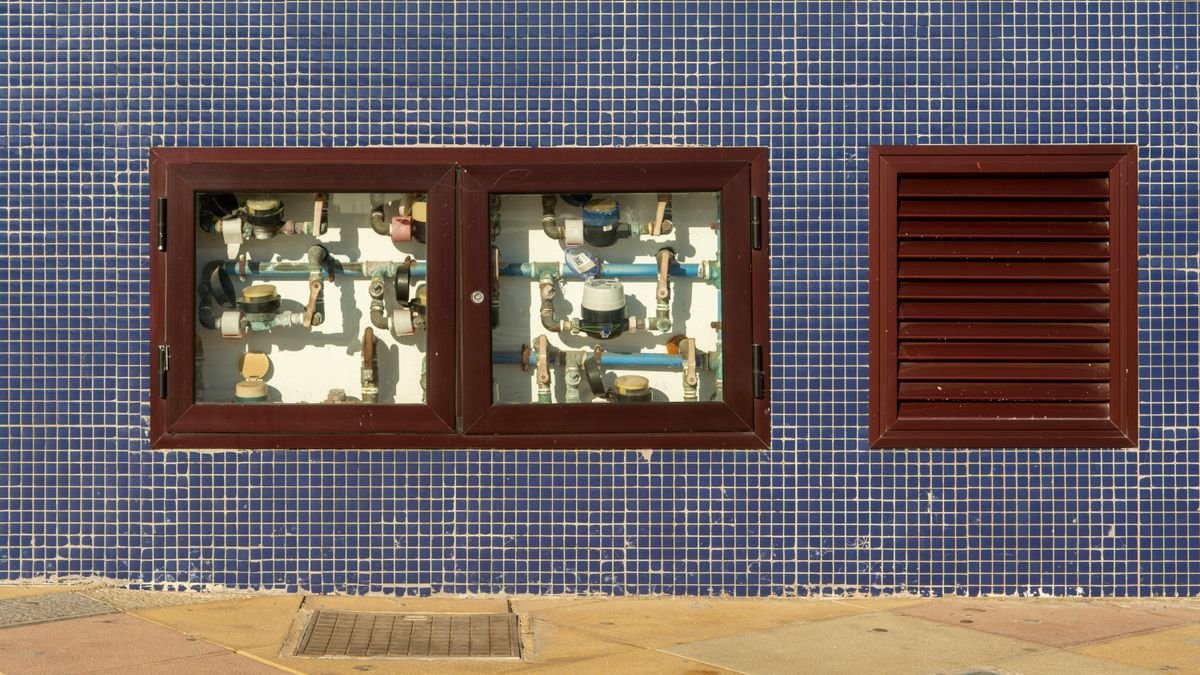
Find your water meter, write down the reading, and use no water for two hours. If the reading changes at all, the EPA says you probably have a leak somewhere. It can reveal a hidden leak that is using water during the test, even one you will never see. Before you start, make sure nothing runs on its own: an ice maker, a water softener or a sprinkler timer can turn the meter and look like a leak. A leak that only runs now and then may not show up in two hours, so repeat the test if the bill still looks high.
The EPA adds a second clue on the bill itself: if a family of four uses more than 12,000 gallons a month in a cold month like January or February, there could be serious leaks.
The toilet dye test
Put a few drops of food coloring in the toilet tank and wait 10 minutes without flushing. If color shows up in the bowl, the tank is leaking into it, usually through a worn flapper. Flush afterward so the dye does not stain.
The EPA says flappers should be checked and replaced at least every five years, and that an old flapper can silently leak thousands of gallons a year. Take the old one, or a photo of it, to the hardware store so the replacement fits.
Two more the EPA counts: a faucet dripping once per second can waste more than 3,000 gallons a year, and a showerhead leaking 10 drips a minute more than 500. Outside, an irrigation leak about the size of a dime’s thickness, 1/32 of an inch, can waste about 6,300 gallons a month.
What Each Fix Is Worth at One Real Price
Here is what the EPA’s own water estimates are worth at New York City’s combined rate of about $18.53 per 1,000 gallons. These are estimates of usage-based charges, not guaranteed cuts to a total bill; fixed charges, tiers and sewer averaging can make the real number lower. The point is the order, not the exact dollars.
| Fix | Water saved per year (EPA estimate) | Worth at $18.53 per 1,000 gallons |
|---|---|---|
| Stop a leak running 50 gallons a day | about 18,250 gallons | about $338 |
| Replace old, inefficient toilets with WaterSense models | 13,000 gallons | about $241 |
| Fix the average household’s leaks | more than 9,300 gallons | about $172 |
| Fix a faucet dripping once per second | more than 3,000 gallons | about $56 |
| Swap in WaterSense showerheads | 2,700 gallons | about $50, plus water-heating energy |
| Swap in WaterSense bathroom faucets or aerators | 700 gallons | about $13, plus energy |
| Run the dishwasher only when it is full | nearly 320 gallons | about $6 |
Three things stand out. Leaks top the list, and finding them costs nothing. The cheap fixtures are worth doing but are not where the money is; the EPA says a WaterSense showerhead, capped at 2.0 gallons a minute against the standard 2.5, also saves the average family more than 330 kilowatt-hours of electricity a year, so its real value is partly on your energy bill. And the habit tips at the bottom are real but small. A family that skips them and fixes a running toilet comes out well ahead.
Replacing toilets is the one purchase on the list. It can be worth pricing if your toilets are old, but it is a decision to run against the actual quote, not a reflex.
Outdoor Water Is Where the Big Swings Hide
The EPA says outdoor water use averages more than 30 percent of a household’s total and can reach 60 percent in dry regions. It also says as much as half of the water used outdoors can be lost to wind, evaporation and runoff from inefficient watering.
Whether that water also pays sewer depends on your utility. Under winter averaging, summer lawn water usually does not raise your sewer charge, which is exactly the point of the method. Where sewer is billed on every gallon, you may be paying sewer charges on outdoor water that never enters the sewer. Ask your utility whether it offers any way to separate outdoor use; if it does, ask what it costs before assuming it pays off.
The no-cost steps come first: water in the early morning or evening, check sprinkler heads after winter, and fix hose connections that drip at the spigot.
If You Rent
How much of this helps depends on how your water is billed.
If you have your own meter and your name is on the bill, everything above applies, and a showerhead or aerator swap is one of the few water upgrades you can take with you when you move (keep the originals to put back).
If water is included in your rent, saving water will not lower your rent. Report running toilets and drips to the landlord promptly anyway, and keep a record of the request; it is their bill and their pipes.
If your building splits a master bill among tenants by a formula, your own savings are shared with everyone else’s usage. Ask the landlord or the billing company how the split works before you spend money on fixtures.
More Worth Knowing
The hot water you save also shows up on your gas or electric bill. Our DIY home energy audit covers the water heater itself, including the temperature setting and an insulating jacket, so we have not repeated it here.
Water bills are still climbing. Bluefield Research reported that U.S. household water and sewer bills rose 5.1 percent in 2025, a five-year high. If a bill is already more than you can pay, call the utility before it is past due. Many cities run customer assistance programs, and Bluefield names Seattle, San Antonio and Philadelphia among those offering bill discounts. If you are deciding which bills to cover first in a tight month, our guide to which bills to pay first explains why utilities rank near the top.
If an old dishwasher or washing machine is part of the problem, our repair-versus-replace guide shows how to decide whether a new one is worth buying.
For the electric side of the summer bill, see how to save money on utility bills this summer.
Frequently Asked Questions
Why is my sewer charge higher than my water charge?
Bluefield Research ties sewer rates to the scale and complexity of treatment infrastructure, along with energy and labor costs. Across 50 large cities, it found sewer charges ran an average of $19.23 a month above water charges over five years. Your bill shows your own split.
What is winter averaging?
It is a way of billing sewer that uses your water use in the winter months, when little water goes on lawns, to set your sewer charge for the following year. The months and the rules vary by town, so ask your utility which bills count.
How do I know if I have a hidden leak?
Read your water meter, use no water for two hours, and read it again. Any change suggests a leak. Then do the toilet dye test, since worn toilet flappers are among the common household leaks the EPA lists.
Do I have to pay a water bill that a leak ran up?
Do not assume it will be reduced automatically, but ask: many utilities offer a leak adjustment after the leak is repaired. Expect a deadline, a limit of about one adjustment a year, and a request for receipts. Outdoor, pool and irrigation leaks are often excluded.
What is the fastest way to cut your water bill?
Find and fix leaks. They cost nothing to find with the meter test, and in the EPA’s estimates a leak running 50 gallons a day outweighs every low-cost fixture swap combined. Then look up how your sewer charge is set, and time large water uses around any winter averaging months.
The Bottom Line
The best first step to cut your water bill is usually not a new fixture. It is ten minutes with your bill and two hours with your meter. Find what you pay per 1,000 gallons, find out how your sewer charge is set, and find the leaks. If your town averages winter usage, do it before the averaging months begin, because what runs down the drain this winter can set what you pay all next year.
Then buy only the fixes that clear your own math.
Want more tips like these delivered to your inbox? Sign up below — you’ll also get our free grocery budget worksheet, and we only send stuff that’s actually useful.