Published: October 21, 2026
Most decluttering advice tells you to start somewhere easy. A drawer. One shelf. Something you can finish before lunch so it feels like you have begun. That is good advice for your morale and almost useless for your bank account, because easy and expensive are rarely the same pile.
There is one question with a dollar sign attached, and hardly anyone asks it first: which of these things is still taking money out of the account? Not what it would fetch if you sold it. What it costs you to go on owning it. Some of what is in your garage right now is, in the plainest sense, charging you rent.
So this guide sorts your clutter by one thing only: how much each item is still costing you to own.
Key Takeaways
- Sort by what something costs you to keep, not by what it might sell for. Those two questions produce completely different piles, and only one of them lowers a bill.
- Anything in paid storage goes first. National street rates averaged $134 a month in August 2026, according to RentCafe’s analysis of Yardi Matrix data — round numbers, about $1,600 a year to keep things you are not using.
- The second pile is whatever you have bought twice because you could not see that you already owned it. That leak is quiet, repeating, and caused by storage rather than carelessness.
- The third is anything bulky enough to push you toward paying for more space — the shelving, the bins, the shed, and the garage you stopped parking in.
- What to do with the pile afterward — sell it, donate it, bin it — is a separate question with its own arithmetic, and we handle it separately.
In short: work through three piles in order — things you are paying to keep, things you keep rebuying, and things that are quietly making you buy space — because that is the order the money runs in.
| The pile | Where to look | What it is costing you |
|---|---|---|
| 1. Charging you rent | Storage unit, garage appliance, an unused vehicle | A bill that arrives every month |
| 2. Bought twice | Tools, hardware, cables, supplies | Repeat purchases you never notice making |
| 3. Eating your space | Garage, spare room, basement | Pressure to pay for more room |
Sort by What It Costs, Not by What It Is Worth
Almost every decluttering method asks one of two questions about an object: do you love it, or could you sell it. Both questions are about the thing. Neither asks what the thing is doing to your spending.
Take an exercise bike bought three years ago for $400 and ridden for five weeks. The $400 is gone, and arguing with yourself about it is a reliable way to waste an afternoon. But if that bike is one of the reasons a storage unit is being paid for every month, the cost is not historical at all. It is live, and it renews on the first whether anyone rides anything or not.
That difference — between what something cost you once and what it is costing you continuously — is the entire sort order. It also explains why decluttering so often produces a tidy house and an unchanged budget. The tidying started in the pile that was already free to own.
Pile One: The Things That Are Charging You Rent
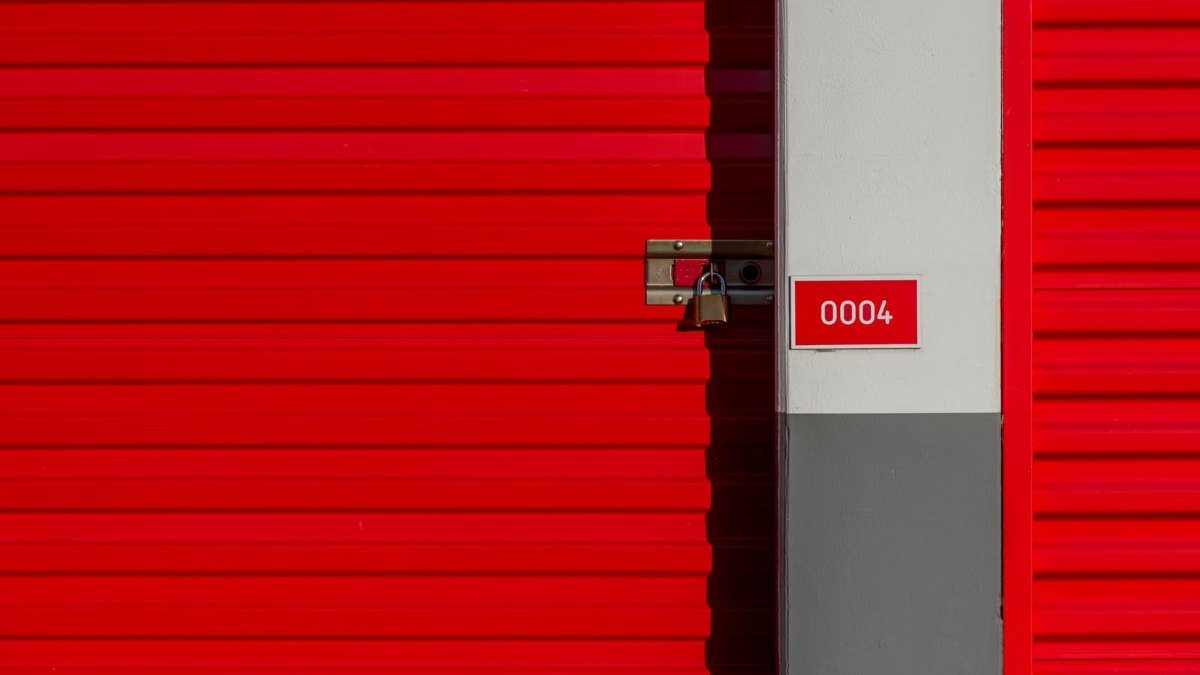
1. Start with anything you are paying to store.
Nothing else on this list has a price tag this legible. National street rates for self storage averaged $134 a month in August 2026 — that figure comes from RentCafe’s monthly self storage report, which tracks Yardi Matrix data and is updated as rates move, so it is worth checking against the month you are reading this. At that national average, a unit runs to roughly $1,600 a year.
About $1,600 a year — twelve months at the August 2026 national average street rate, which spans all unit sizes and is the price advertised to a new customer.
That wording matters, because the advertised rate and the rate you keep paying are not always the same thing. Raising rent on customers who have already moved in is common enough to have its own name in the industry — the existing customer rate increase — and the trade press treats it as a routine part of running a facility. Inside Self-Storage discusses how operators and buyers plan around those increases. How soon and how steeply it happens varies, so the figure worth knowing is not the one on the sign outside — it is the one on your current statement.
Which makes the test simple, and slightly uncomfortable. Without opening the door or checking a photo, list what is in the unit. If you cannot finish the list, you already have your answer about whether it is worth $1,600 a year — and at that point you are not really deciding anymore, you are just paying.
To be fair to storage: it can absolutely earn its cost. A unit between houses, during a deployment, through a renovation, or while an estate is sorted is buying you something real. The problem is not storage. It is storage that was meant to be temporary and quietly turned into a standing expense that nobody ever revisits.
2. Then anything that runs, registers, or insures.
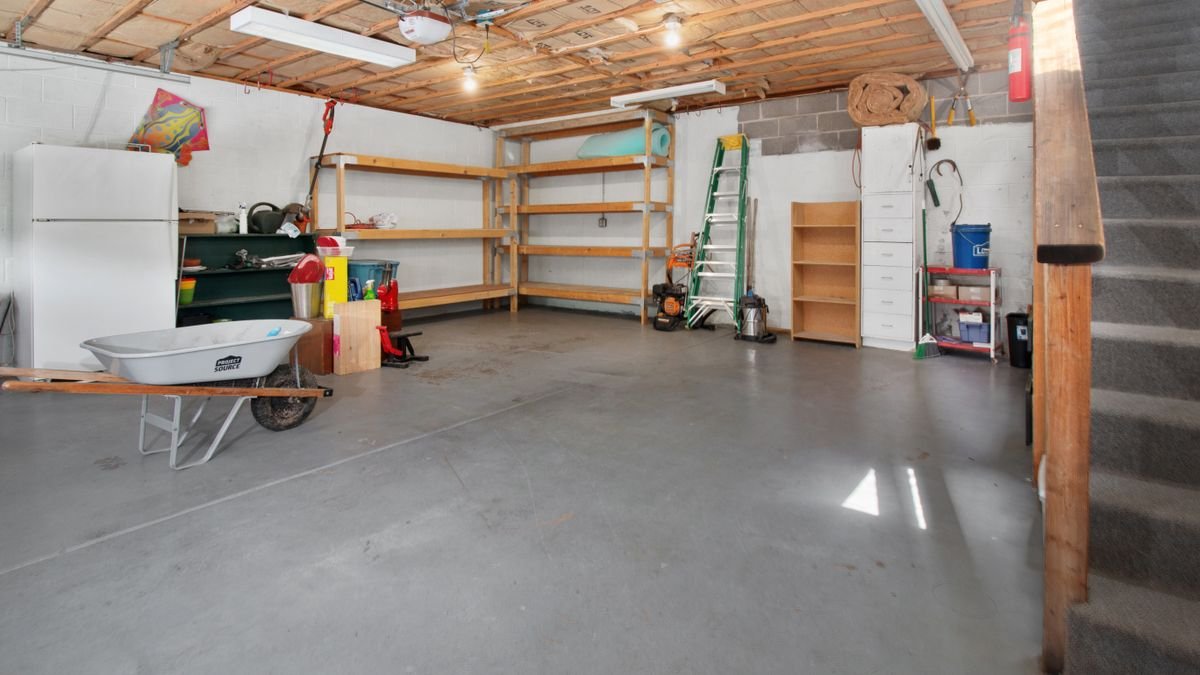
Some possessions bill you without a storage contract. The second refrigerator in the garage is the classic one: it draws power every hour of the year regardless of how little is in it, which is why we singled it out in our DIY home energy audit as a better target than the phone chargers everyone frets about. A boat, camper, trailer or second vehicle can carry registration and insurance while it sits unused for eleven months. A freezer in the basement keeps running for whatever is at the bottom of it.
List them on paper with their annual cost beside them, because that number is the one nobody has ever said out loud. An item you would not buy today, carrying a bill you never thought of as a bill, is the easiest money in this exercise, provided it is genuinely not earning its keep.
Pile Two: The Things You Have Already Bought Twice
3. Look for the categories you cannot inventory.
Nobody buys a second sofa by mistake. The rebuying problem has a very specific shape: it happens to things that are small, dull and stored deep. Batteries. Adhesives. Phone cables. Screws and fasteners. Paint. Garden twine. Craft supplies. Extension cords. Children’s clothes bought a size ahead and then buried behind the size they are wearing now.
The mechanism is less about forgetfulness than visibility. It is hard to rebuy something you can see, and easy to rebuy something you cannot find at the moment you need it — and once you keep both, the next search gets harder still. We have not found this quantified in any survey worth citing, so treat it as a pattern to test in your own house rather than a law. It is worth testing, because it is the one leak here that repeats.
4. Put a number on it before you start.
The reason this pile gets ignored is that no single purchase in it ever felt like a mistake. Each one solved a real problem: the thing was genuinely needed, and the thing genuinely could not be found. Here is a hypothetical household’s tool drawer, totalled in one place rather than met one purchase at a time.
| A worked example: duplicates in one household’s tool and hardware drawers | Spent again |
|---|---|
| Three tape measures, two more than anyone needs | $24 |
| Four part-used tubes of the same adhesive | $28 |
| A second screwdriver set, identical to the first | $22 |
| Six charging cables for two phones | $60 |
| A second cordless drill, the first one buried at the back of a shelf | $79 |
| Money spent on things already owned | $213 |
Those figures are illustrative rather than observed, and the exact total is not the point. The shape of it is: $213 leaving in increments small enough that none of them registered, out of one category in one set of drawers. Note carefully what that number is, though. It is money already gone, and no amount of decluttering claws it back. The saving is the next $79 drill you do not buy, because this time you can see the first one. Now count the categories in your home stored the same way.
5. What to declutter first to save money here: whatever is blocking the view.
In this pile the first thing out is not the most valuable thing or the most annoying thing. It is the bulky, low-value thing sitting in front of everything else — the empty boxes kept for returns that never happened, the broken appliance awaiting a repair nobody has scheduled, the bags of packaging. Clearing it returns nothing by itself, which is why it gets skipped. It earns its place on the list because of what sits behind it: the shelf you cannot see is where the next duplicate purchase gets decided.
Pile Three: The Things Making You Pay for Space
6. Check whether your garage is still a garage.
Researchers at UCLA’s Center on Everyday Lives of Families spent four years inside 32 middle-class Los Angeles households, photographing and cataloguing what was actually in them. Among the findings: cars had been banished from 75% of the garages to make room for rejected furniture and stacked bins and boxes.
That study is small, regional and two decades old, so treat the number as a portrait rather than a national statistic. The shape of it is probably familiar, though, and the economics are worth saying plainly: a garage is a room you have already paid for, in a house priced by the square foot. Filling it with things you do not use while a car that cost real money sits outside in the weather is a storage decision with a real price attached — and one of the few that never shows up on any statement.
7. Count what you have bought to hold things you do not use.
Very few families sit down and decide to spend more on space. What happens instead is a sequence, and each step in it looks sensible on its own. Shelving, because things are on the floor. Bins, because the shelves look untidy. A wardrobe, then a shed, then a unit. Each step looks small on its own, and each one costs money nobody ever budgeted as storage.
The volume grows on its own schedule, too. The same UCLA researchers reported that their data suggest each new child adds around 30% to a family’s inventory of possessions during the preschool years alone. Nobody chooses that; it simply arrives. Which is why the useful habit is to reverse the order of the question. Before buying anything whose job is to hold your things, ask whether the things have earned the holder.
The Order, Start to Finish
Work down the money. Cancel or empty anything you are paying to store. Put an annual figure beside anything that runs, registers or insures, and retire what has not earned it. Pull the bulky worthless layer out of the places where duplicates breed, so you can finally see what you own. Then reclaim the space that is pushing you toward buying more space.
What comes out is now a pile on the floor, and what to do with it is genuinely a different question — with its own arithmetic, and 2026 rules most articles have not caught up with. We have covered that separately in sell or donate: what your decluttered pile is actually worth. Do not let it slow the sorting down; a pile in the hallway still beats a unit across town.
If the kitchen is where your version of this lives, we have walked that room end to end in our guide to decluttering your kitchen in one weekend. And whatever you stop paying for, give it a job before it evaporates into the grocery run — our family budget guide covers where to point it.
More Worth Knowing
If you rent storage, pull last year’s statement and this month’s and put them side by side. That comparison is the fastest way to see what has happened to your rate since you moved in, and it tends to make the decision for you.
And resist the most expensive move in decluttering, which is renting storage in order to declutter. A unit taken to buy yourself time to sort things out converts a one-weekend decision into a monthly bill, and the sorting rarely happens faster for it.
Frequently Asked Questions
What should I declutter first to save money?
Anything you are actively paying to keep — a storage unit first, then whatever runs on electricity or carries registration and insurance while unused. Those carry a bill you can point at, so letting them go changes a monthly number rather than just freeing a shelf. The costs that never arrive as a bill — duplicate buying, and the space itself — come next.
Does decluttering actually save money, or does it just make space?
It depends entirely on where you start, which is the argument of this guide. Clearing a bookshelf saves nothing. Ending a storage contract, unplugging an appliance you do not need running, or making your supplies visible enough to stop rebuying them all change what you spend from that month onward.
Is it worth renting a storage unit while I sort through things?
Usually not. Storage earns its cost when there is a genuine, dated gap to bridge — a move, a renovation, a deployment. Renting space to postpone decisions is the one use that tends to become permanent, because nothing about the arrangement creates a reason to finish.
Should I sell what I declutter?
Sometimes, and it is worth deciding deliberately rather than by default, because selling costs you time and listing effort that not every item repays. That is a separate question from this one and we have answered it separately — including what changed for donated goods in 2026.
The Bottom Line
Decluttering to save money is not the same project as decluttering to feel better, and doing the first one well means ignoring almost every list that starts with a junk drawer. Sort by what each thing is still costing you: clear the ones with bills attached, uncover the ones making you buy duplicates, and reclaim the space that is pushing you to pay for more of it.
And when an item is hard to call, one question tends to cut through faster than any rule about joy or sixty-day trials: if this vanished tonight, would you go out tomorrow and buy it again at today’s price? Everything you would answer no to is something you are currently paying to keep.
Want more tips like these delivered to your inbox? Sign up below — you’ll also get our free grocery budget worksheet, and we only send stuff that’s actually useful.