Food waste costs the average American household of four about $56 a week, by the EPA’s estimate. That is not a figure about forgotten luxuries. It is ordinary food — chosen on purpose, paid for, and never eaten — and it covers everything a household buys, not only what sits on the pantry shelf.
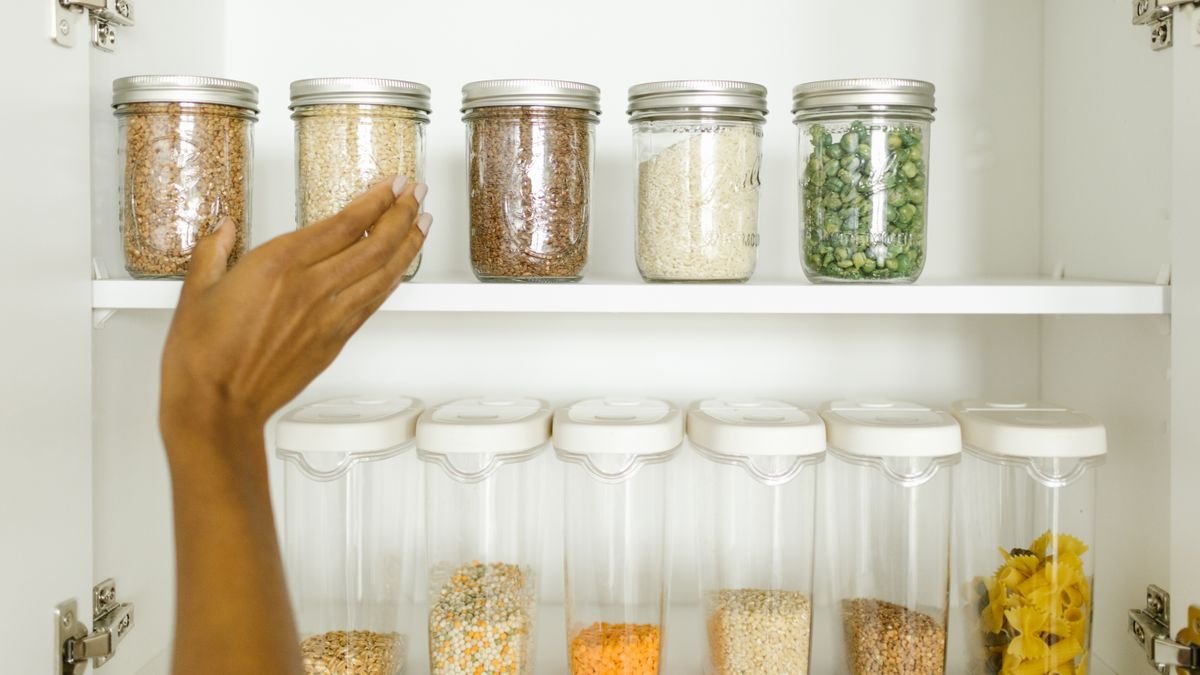
Most pantry advice answers a different question than that one. It shows you matching containers, a label maker and a before-and-after photo. The after photo is genuinely nicer to look at. It also tends to leave the money exactly where it was, because the two things that actually drain a food budget are just as invisible in a beautiful pantry as in a chaotic one.
If you want to organize a pantry to save money rather than to photograph it, the method is different from the start. This is a reset aimed at the money instead of the aesthetics: the core of it takes an afternoon, and the first pass costs nothing at all.
Key Takeaways
- The EPA estimates food waste costs a household of four $2,913 a year — an average of $56 a week.
- Two leaks this reset targets: you cannot see what you already own, so you buy it again; and you read quality dates as safety dates, so you throw out food that was still good.
- “Best if Used By,” “Sell-By” and “Use-By” are quality dates, not safety dates. Federal regulations do not require them at all, with one exception: infant formula.
- The fix is visibility and a clear rule for reading dates — not storage containers.
- Containers are worth buying only after the reset shows you a specific problem a container would solve.
First, the number that makes this worth an afternoon
In April 2025 the U.S. Environmental Protection Agency published an estimate of what wasted food actually costs the people who bought it. The finding: food waste costs each U.S. consumer about $728 per year. For a household of four, that works out to $2,913 annually, or roughly $56 a week. The same agency notes that in the United States, over one-third of food is never eaten.
$56 a week
Average cost of wasted food for a U.S. household of four, per EPA estimates
Treat that as a ceiling rather than a personal invoice — it is a national average built from national data, and your own number depends on how you shop and how many people you feed. But even a fraction of it is real money. If your household is capturing half, that is a car payment’s worth of groceries a year going into the trash.
Here is the part worth sitting with: almost none of that is a discipline problem. It is a design problem, and it has two causes.
Leak one: you buy things you already own
Pantries are deeper than they are tall. Cans and boxes stack front to back, which means the back row is not merely untidy — it is functionally invisible. You do not forget the third jar of cumin because you are disorganized. You forget it because from the doorway, standing up, holding a shopping list, there is a jar of something in front of it.
The tell is always the same and it is worth looking for tonight: go and count your duplicates. Not all of them, just the ones that surprise you. It is common to turn up three or four items you own multiples of and did not know it — usually spices, usually condiments, usually the exact shelf-stable things that felt cheap enough not to check.
Each one of those is money already spent on a thing you already had. And unlike a bad impulse buy, it repeats, because the conditions that produced it have not changed.
Leak two: you throw away food that was still fine
This is the one that surprises people, and it is worth getting exactly right, because the official position is not what most shoppers assume.
According to the USDA’s Food Safety and Inspection Service, product dating is not required by federal regulations — except for infant formula. Most of the dates stamped on what is in your pantry are applied voluntarily — FSIS notes they may be put there by the manufacturer or the retailer — rather than because federal law demands it. Some states set their own labeling rules on top of that.
And the agency is specific about what those phrases mean:
- “Best if Used By/Before” indicates when a product will be of best flavor or quality. FSIS states plainly that it “is not a purchase or safety date.”
- “Sell-By” tells the store how long to display the product for sale — it is inventory management, aimed at the retailer, not at you.
- “Use-By” is the last date recommended for use while the product is at peak quality. It is not a safety date either, with one exception: infant formula.
- “Freeze-By” indicates when a product should be frozen to maintain peak quality.
The two things to hold on to. Infant formula is the genuine exception — treat its date as a hard stop, every time. And for everything else, a date passing is not permission to stop paying attention. FSIS puts the responsibility where it belongs: consumers must evaluate the quality of a product before eating it to determine whether it shows signs of spoilage. But note what that check can and cannot do. FSIS distinguishes two kinds of bacteria: spoilage bacteria, which make food smell and taste wrong without making anyone ill, and pathogenic bacteria, which cause foodborne illness. Your senses find the first kind. They are not a reliable test for the second. So the date is not the test — and neither, on its own, is your nose.
What this changes in practice is the default. If you have been clearing the pantry by reading numbers and tossing anything expired, you have been throwing away an unknown quantity of food that may well have been fine, on the authority of a label that was never making a safety claim. So use your eyes and nose for what they are actually good at: finding spoilage. Off odors, off flavors, changed texture, mold — those are real signals, and when you find one, throw the food out without guilt. What that check cannot do is run in reverse. Passing it is not a clearance, which is why it is never worth tasting a questionable item to settle the matter. What actually keeps shelf-stable food safe past a quality date is the unglamorous part: it was stored properly and its packaging is intact. So check the container as well as the contents — FSIS says to discard cans that are dented, rusted or swollen, however fine what is inside looks.
How to organize a pantry to save money, step by step
1. Take everything out and put it on one flat surface.
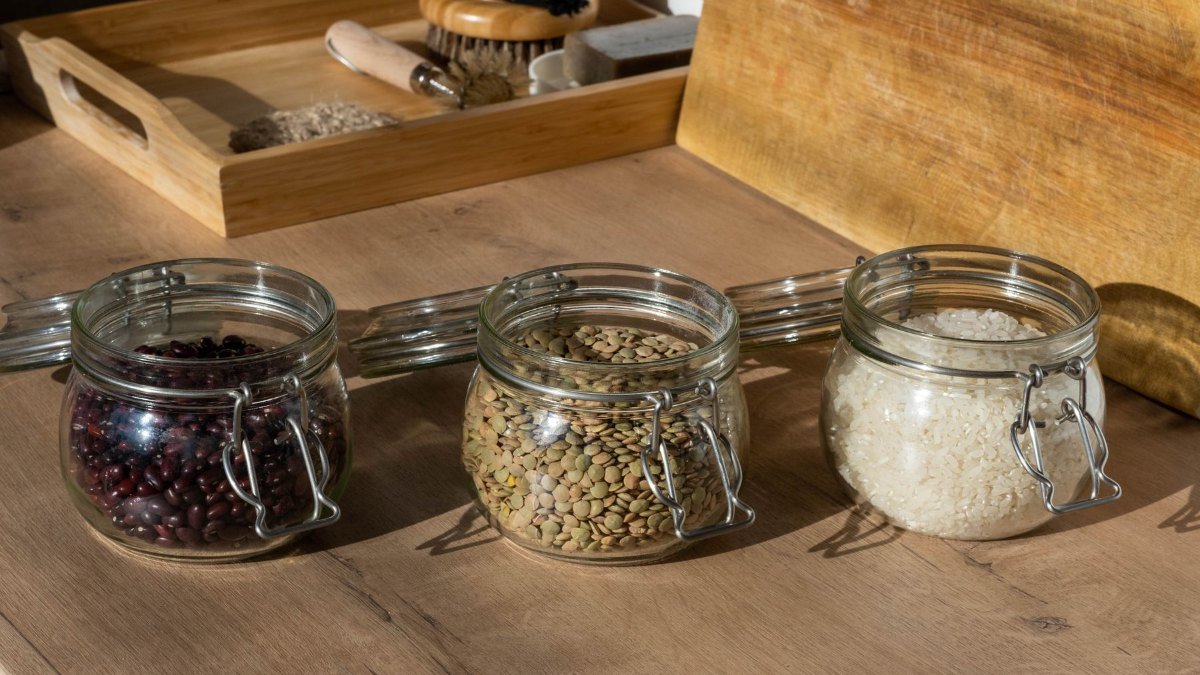
All of it, onto the table or the counter. This step is non-negotiable and it is the step people skip. You cannot inventory a pantry by looking into it, for the same reason you could not see the third jar of cumin — depth hides things. Emptying it is what converts a vague sense of “we have some pasta” into a countable fact.
2. Sort into four piles, not three.
Keep, toss, and donate are the usual three. Add a fourth: use first. That pile is the whole point — it is the food you already own that is closest to the edge of its useful life, and it is where the money is. If it goes back onto a shelf mixed in with everything else, you will buy around it again.
3. Write down everything you found more than one of.
A phone note is fine. This list is not a chore — it is the shopping list you check before you shop, and it is the single highest-return output of the whole afternoon. Three duplicate spice jars are three you will not buy again the next time you are standing in that aisle — and money you already spent twice.
4. Put the oldest of each item in front.
Grocery stores have done this forever, and they do it because it works. When you come home with a new jar, the new one goes behind the old one. It takes three seconds at put-away time and it quietly removes most of the “how long has that been there” problem for good.
5. Give every category one home, and label the shelf rather than the container.
Baking in one place, canned goods in another, snacks in a third. Labeling the shelf instead of the container is the cheaper and more durable choice: shelf labels survive you buying a different brand, running out, or decanting nothing at all. A label maker is optional. Masking tape works.
6. Photograph the finished shelves.
One photo per shelf, on your phone. This is the closest thing to a free inventory system there is — at the store, when you cannot remember whether you have rice, you look. It stops being useful after a few weeks, which is fine; retake it next time.
7. Cook from the “use first” pile for one week.
Before you plan anything else, plan around what is already open and already paid for. One week of this is often enough to clear the pile, and it is the week where the afternoon actually pays you back. If you want a structure for it, our guide to meal planning on a budget works well pointed at a pantry instead of a store.
What to buy afterwards — and what not to
Here is where most pantry articles would list containers. We would rather tell you the truth about them: containers do not save money. They make an organized pantry easier to maintain, which is a real benefit and a different one.
So buy in this order, and only if the reset produced the problem:
- Nothing, first. Run the whole reset with what you own. The shelves are often emptier afterwards than the containers you were about to buy would have filled.
- A riser or a turntable, if depth is the problem. These attack the invisibility that costs you money more directly than anything else on this list — they bring the back row into view. Both are inexpensive, and worth it.
- Airtight containers, only for things that genuinely go stale — flour, sugar, rice, cereal. Decanting canned goods into matching jars is a styling choice, and a perfectly enjoyable one. It is not a saving.
- A label maker, last, if ever. Tape and a marker do the same job.
If you are working through the rest of the house on the same logic, what to declutter first to save money ranks the whole household by what the clutter is costing you, and decluttering your kitchen in one weekend covers the drawers and counters this article deliberately skipped.
What this looks like six weeks later
Honest expectations, because the before-and-after photo genre oversells this badly.
The shelves will drift. Within about six weeks a pantry that was reset in an afternoon will look lived-in again, and that is not failure — it is a pantry being used. What tends to persist is not the tidiness but the two habits underneath it: new items going behind old ones, and checking the duplicate list before shopping. Those two can survive the shelves getting messy again, and they are the parts doing the financial work.
What you can reasonably expect is a smaller grocery run for a week or two while you eat the “use first” pile, and fewer of those small repeat purchases afterwards. What you should not expect is $56 a week back. That figure is a national average across all food waste, much of it fresh produce that no pantry system touches.
Frequently asked questions
What is the 3-3-3 rule for groceries?
It is an informal shopping heuristic that circulates online: buy three vegetables, three fruits and three proteins for the week. Variants such as “3-3-2-2-1” float around alongside it. It is not an official guideline from any food or health agency, and it is worth being clear about what it is for — it constrains what goes into the cart. It does nothing about food you already own and cannot see, which is the leak this article is about. Treat it as a shopping aid, not a pantry system.
Does organizing a pantry to save money actually work, or is it just tidying?
It works to the extent that it changes two specific behaviors — buying duplicates of things you cannot see, and discarding food on the authority of a quality date. Tidying on its own does not move either one, which is why a beautifully organized pantry can still leak money. If you only take two things from an afternoon of this, take the duplicate list and the oldest-in-front habit.
Is it safe to eat food after the date on the package?
For most shelf-stable pantry goods, the date is a quality date rather than a safety date, and FSIS says so directly. The responsibility that comes with that is real: you have to evaluate the food for signs of spoilage before eating it. Infant formula is the exception and should be treated as a hard date. If something looks, smells or seems wrong, throw it out — but do not read the reverse as a safety clearance, because the bacteria that cause foodborne illness are not the ones that announce themselves in odor or taste. A passed date is not a reason to throw out good food, and an unpassed date is not a reason to trust bad food.
How often should I do a full reset?
Twice a year is plenty for the full take-everything-out version. The duplicate list and the oldest-in-front habit are what carry the months in between, and they cost seconds rather than afternoons.
Do I need airtight containers?
Only for things that stale or attract pantry moths — flour, sugar, rice, cereal, nuts. Canned and jarred goods are already airtight. Buying containers for them is decorating, which is allowed, but it should be counted as a decorating budget rather than a grocery saving.
More Worth Knowing
If you want to know whether your overall grocery spending is in a normal range before you start cutting, our Grocery Budget Calculator compares what you spend against household size, which is a more useful starting point than a national average.
In short: a pantry costs you money in two ways — by hiding what you own so you rebuy it, and by carrying dates you have been reading as safety warnings when they are quality guidance. Fix the visibility, fix how you read the label, and the containers become optional.
Published: October 23, 2026
Want more tips like these delivered to your inbox? Sign up below — you’ll also get our free grocery budget worksheet, and we only send stuff that’s actually useful.