Published: October 30, 2026
Say a washer stops mid-cycle with a tub full of gray water, and by the time the technician leaves there is a number on a clipboard: $320. The machine is three years old. A new one is about $600. And the rule of thumb everyone repeats says that is more than half the price of new, so walk away.
Following that rule here would likely cost money. The 50 percent rule, the usual shortcut for deciding whether to repair or replace appliances, compares the repair to the price of a new machine, but it never asks the question that actually decides the matter: how many more years does the repair buy, and what would those same years cost if you bought them new? A three-year-old washer is still early in its average useful life. Paying a little over half the price of new to get those years back is usually a bargain, not a mistake.
This guide is a repair vs. replace decision framework, not an appliance-by-appliance list. It works the same way for a washer, a dishwasher, a range or a refrigerator, and it takes about five minutes with a phone calculator. It also has a lot to say about the weeks before Black Friday, when the repair-or-replace decision can start being made for you by a sale banner.
Key Takeaways
- Check who else should pay first. A manufacturer’s warranty or a recall can turn a repair bill into a free fix, and a known recurring defect is worth raising with the manufacturer even without a recall.
- Think in years, not percentages. Divide the repair quote by what one year of a new machine costs. That tells you how many years the repair has to buy to beat replacing.
- Young machines are usually worth fixing, even when the quote is more than half the price of new. Old budget machines often are not, even when the quote is small.
- Energy savings rarely decide it alone. ENERGY STAR’s own estimate for replacing an old refrigerator is about $150 over the new one’s 12-year life.
- A sale can tip a close call. It cannot turn a working appliance into a broken one.
In short: rule out free fixes, get a real diagnosis, then divide the quote by the cost of a new machine’s year — and repair whenever the old one can reasonably deliver more years than that.
Why the 50 Percent Rule Gets Some Cases Wrong
For years, the standard advice was simple: if a repair costs more than half the price of a new appliance, replace it. Consumer Reports used to give that advice. It has since refined it: in 2023, NerdWallet reported that Consumer Reports based its newer approach on member feedback covering about 528,000 products bought from 2012 through 2022, and it now offers tools that weigh what you paid, how old the machine is and what the repair costs.
The reason the old rule needed refining is built into its arithmetic. It treats a $320 repair on a three-year-old washer exactly like a $320 repair on a ten-year-old one. Those are not the same purchase. The first buys back most of a machine’s working life. The second buys back a year or two, on a machine that is about to start asking for more.
What the rule is missing is time. And the easiest way to put time back in is to know roughly how long these machines last to begin with. The Association of Home Appliance Manufacturers, the industry’s trade group, gave NerdWallet these 2019 estimates of average useful life:
| Appliance | Average useful life (AHAM estimate) | Roughly halfway |
|---|---|---|
| Top-freezer refrigerator | 14 years | 7 years |
| Side-by-side refrigerator | 11.1 years | 5.6 years |
| Gas range | 14.2 years | 7.1 years |
| Electric range | 11.6 years | 5.8 years |
| Dryer | 13.4 years | 6.7 years |
| Top-load washer | 11.2 years | 5.6 years |
| Front-load washer | 9.1 years | 4.6 years |
| Dishwasher | 12 years | 6 years |
These are averages, not promises. Some machines die young and some outlive their owners’ patience. But an average is enough to turn a gut feeling into a number, and a number gives you a useful benchmark when a technician is standing in your kitchen waiting for an answer.
Four Checks to Run Before You Decide
1. Find out whether someone else should be paying.
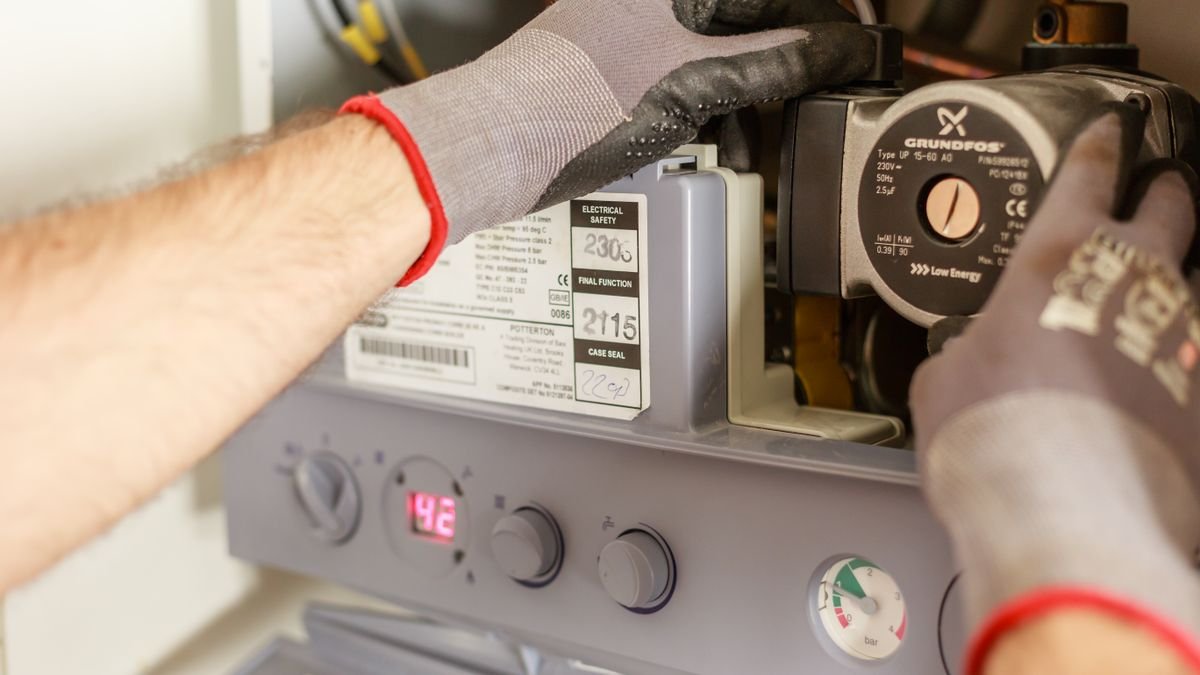
Before any math, find the model number (usually on a sticker inside the door or along the frame) and do two quick searches. First, the warranty: coverage length varies by brand and sometimes by part, so read the actual terms rather than assuming it has run out. Second, recalls. The U.S. Consumer Product Safety Commission keeps a searchable list at cpsc.gov/Recalls, and Consumer Reports suggests also checking the brand’s own site and online owner forums, since a problem that keeps coming up can sometimes get a free fix even without a formal recall.
One thing worth knowing if the machine is still under warranty: using an independent repair shop does not, by itself, let a company void it. The Federal Trade Commission explains that under the Magnuson-Moss Warranty Act, a company generally cannot void your warranty or deny coverage just because you used an independent repair shop or another company’s part — unless it provides that part or service free under the warranty. It can still refuse coverage for damage the outside part or repair actually caused. And if you want the warranty to pay for a repair, Consumer Reports notes that you will generally need to arrange it through the manufacturer or retailer.
2. Get a real diagnosis, not a guess.
“It’s probably the control board” is not a quote. A repair decision is only as good as the diagnosis under it, so get the specific failed part named and priced. Consumer Reports notes that many technicians charge a visit fee to diagnose the problem and usually put it toward the repair if you hire them, which is fair, but it also means that getting a second opinion costs a second fee.
Before paying for that visit, rule out the free explanations. The troubleshooting section of the owner’s manual is worth a few minutes, because some “failures” are really maintenance: in its dishwasher repair guide, Consumer Reports notes that a dip in cleaning performance could simply be a clogged filter or food and mineral buildup. The same guide lists pump repairs and electronic controls among the jobs to leave to a professional.
The diagnosis also tells you what kind of failure you are dealing with. On refrigerators, Consumer Reports found that median repair costs for seven common problems, including ice makers that stop working and fridges that stop cooling, ran from about $150 to $240. A failed compressor was a different animal, at a median of $562. Same appliance, very different decision.
3. Run the repair vs. replace math in years, not percentages.
This is the step the 50 percent rule skips. It turns the repair quote into a number of years, giving you a benchmark to compare with the machine’s plausible remaining life. It takes two divisions.
First, work out what one year of a new machine costs. Take the full price of the replacement — the appliance plus delivery, installation and haul-away, if you would pay for them — and divide it by that appliance’s average life from the table above. A $600 washer that lasts 11.2 years costs about $54 a year.
Then divide the repair quote by that yearly cost. A $320 repair divided by $54 a year comes to about six. That gives you a simple break-even benchmark: the repair has to keep the old machine running for about six more years to match the yearly cost of buying new.
Repair cost ÷ (replacement cost ÷ average useful life) = the approximate years the repair has to buy
Now compare that with how much life the old machine plausibly has left. For a quick screening estimate, subtract its age from the average useful life in the table. That is a rough benchmark, not a prediction for your particular machine: one that has run trouble-free for years may well outlast it, while an older machine that has started needing repairs may not reach it. Let the repair history, the model’s reliability and the nature of the failure move your judgment up or down. If you can reasonably expect the old machine to deliver more years than the break-even, repair it. If the break-even is longer than the machine is likely to last, the repair is buying years it probably will not get to use.
4. Ask what this repair says about the next one.
A first repair on a machine that has been reliable is one event. A second major repair within a year or two is information. It can mean the machine has developed several age-related problems at once, or that the model has a reliability issue worth researching, and fixing one part does not reset the clock on the rest. The math in step 3 assumes the repaired machine runs normally afterward. On a machine with a history, be more skeptical of that assumption, and count the next likely repair as part of this one: if a second repair is already on the horizon, add its likely cost to the current quote before running the math.
Four Situations, Run Through the Math
The prices below are round illustrative numbers, not quotes, and replacement cost includes installation where it is listed. The point is how the method behaves, and where it disagrees with the 50 percent rule.
| Situation | Repair as % of replacement | Years the repair must buy | Rough years left | Answer |
|---|---|---|---|---|
| 3-year-old top-load washer, $320 repair, $600 new | 53% (rule says replace) | About 6 | About 8 | Repair |
| 5-year-old dishwasher, $280 repair, $600 new plus $150 install | 37% (rule says repair) | About 4.5 | About 7 | Repair |
| 12-year-old budget top-freezer, $562 compressor, $700 new | 80% (rule says replace) | About 11 | About 2 | Replace |
| Same fridge, $150 ice-maker repair | 21% (rule says repair) | 3 | About 2 | Lean replace |
The washer is the case the rule gets wrong. Measured against the price of new, $320 looks like too much. Measured against the eight or so years the machine can reasonably still give, it is a good deal, because those same years bought new would cost far more than $320.
The dishwasher is the easy one: both methods agree, and the years method shows there is room to spare.
The refrigerator shows the opposite failure. A $150 repair looks like an obvious yes under the percentage rule. But on a 12-year-old budget top-freezer, $150 has to buy three years from a machine that averages about two more, and the next repair may not be the cheap kind. By the method’s own math, that leans toward replacing — though with numbers this close, living without the ice maker is a reasonable third option. Consumer Reports reaches a similar conclusion from its own survey data. Its repair-or-replace guide for refrigerators says “it often makes economic sense to repair a refrigerator, even as far as 10 years into ownership,” with budget top-freezers and side-by-sides as the exceptions: if a $400 top-freezer is closing in on 10 years, it says you will want to consider replacing it even though the repair cost may be fairly low.
What about energy savings? They are real, but smaller than the showroom makes them sound. ENERGY STAR says an ENERGY STAR certified refrigerator is about 9 percent more energy efficient than the federal minimum, and that recycling an old refrigerator and replacing it with a certified one can save about $150 over the new model’s 12-year life — roughly $12.50 a year. That can nudge a close call. It will not pay for a refrigerator. If you want to know where your home’s energy money is really going, our DIY home energy audit is a better place to start than a new appliance.
The Black Friday Problem
Late November is when the repair-or-replace question gets answered by advertising. A refrigerator that hums a little loudly, a dryer that takes two cycles, a range with one dead burner — none of them were broken last week, but a doorbuster price makes them feel like problems with a deadline.
Run the sale through the same math and you can see exactly what it changes. A lower price lowers the cost of a new machine’s year, which raises the number of years a repair has to buy. So a real discount can legitimately tip a close call toward replacing — the 12-year-old refrigerator above is a fair candidate. What a sale cannot do is turn a machine that works into one that needs replacing. If there is no repair quote on the table, there is no decision to make yet.
And if your appliance is old enough that a breakdown is coming sooner or later, the cheaper move is often to start saving for it now, before it fails at a bad time. A sinking fund for appliances turns a surprise into a planned purchase, which also means you can wait for a good price instead of taking whatever is in stock. For the season itself, our guide to avoiding holiday overspending covers how to keep a sale from writing your budget for you.
If You Do Replace It
Timing still matters. Consumer Reports lists July, September and November as the best months to buy refrigerators. If your old machine is limping along, waiting for one of those windows can be part of the plan.
Then think twice about the extended warranty pitch at the register. In Consumer Reports’ most recent refrigerator survey, nearly half (48 percent) of people who bought an extended warranty never used it. And the typical warranty cost only $6 less than the typical out-of-pocket repair of $197 — so you pay roughly the price of one repair up front, for coverage nearly half of buyers never use. The FTC’s guidance on service contracts makes the same point more gently: coverage may not be worth it for a product that is not likely to need repairs, and putting the money into a savings account can be the better option. A home warranty is a different product with its own math; see Is a Home Warranty Worth It? before you sign one.
Finally, get rid of the old one properly. If a refrigerator or freezer is going, ENERGY STAR keeps a page to find a fridge or freezer recycling program, and many retailers will haul away the old unit when they deliver the new one. Resist moving it to the garage as a second fridge. ENERGY STAR says an old refrigerator uses about 20 percent more energy on average than an ENERGY STAR certified model, so a spare that holds a few drinks can quietly cost more than it saves.
More Worth Knowing
Some fixes are genuinely small. On refrigerators, Consumer Reports describes replacing a torn door gasket, shelves, bins and handles as reasonable do-it-yourself jobs, while compressors, through-the-door ice makers and control panels are better left to a professional. If the problem is one of those simple parts and you are comfortable doing the work, the whole repair-or-replace question may cost less than the service call. For anything electrical, gas-related, sealed-system or unfamiliar, use a qualified professional.
And if a repair bill would be hard to cover this month, that is a cash-flow problem, not an appliance problem. It is the kind of expense an emergency fund exists for — and a good reason to build one before the next machine gives out.
Frequently Asked Questions
Is the 50 percent rule wrong?
Not wrong so much as incomplete. It works reasonably well for machines near the middle of their life. It tends to push young machines toward replacement too early and old budget machines toward repair too often, because it ignores how many years the repair actually buys.
Is it worth repairing a 10-year-old refrigerator?
Often, yes. Consumer Reports says it often makes economic sense to repair a refrigerator even as far as 10 years into ownership. The exceptions are budget top-freezer and side-by-side models, where replacing can be the better call even for a modest repair.
Will an independent repair shop void my warranty?
Generally not. The FTC says companies cannot void a warranty or deny coverage solely because you used an independent shop or a third-party part, unless they provide that part or service free under the warranty. They can refuse coverage for damage the outside repair or part caused.
Should I pay for a diagnostic visit before deciding?
Usually, yes — the decision depends on knowing what actually failed. Many technicians credit the visit fee toward the repair if you go ahead, but a second opinion generally means a second fee.
The Bottom Line
A repair quote is not expensive or cheap on its own. It is expensive or cheap compared with what the same years would cost bought new. Divide the quote by the price of a new machine’s year, compare the answer with how much life the old one has left, and the financial side of the decision becomes much clearer.
So when the clipboard comes out, do not ask whether the number is more than half the price of new. Ask how many years it buys. If the old machine can deliver them, keep it running and let the sale go by.
Want more tips like these delivered to your inbox? Sign up below — you’ll also get our free grocery budget worksheet, and we only send stuff that’s actually useful.