
Published: October 9, 2026
A family financial emergency plan is not the same thing as an emergency fund, and the difference is worth stating plainly before anything else. The fund is money set aside for an unexpected expense. The plan is the information, documents, contacts and access arrangements that let your household actually function during a disruption — knowing where the insurance policy is, which company holds the mortgage, who the pediatrician is, and which account the paycheck lands in. Most families have given some thought to the first and almost none to the second.
To build a family financial emergency plan, gather four groups of records — household identification, financial and legal documentation, medical information, and a household contact list — keep a copy somewhere you could reach if you couldn’t get into your house, and review it once a year. You can start it in a single afternoon, even if tracking everything down takes longer.
Key Takeaways
- An emergency fund and an emergency plan solve different problems. Money doesn’t help much in the first week if nobody can find the policy number.
- The federal framework is the Emergency Financial First Aid Kit, a joint publication from Operation HOPE and FEMA. It organizes records into four groups rather than one long list, with insurance policies filed inside the financial and legal group.
- The kit notes that once you finish the first two groups — household identification and financial and legal documentation — you have the information needed to apply for FEMA disaster assistance. That is a concrete finish line for the first afternoon’s work.
- Keep some cash in small bills at home. Ready.gov’s reasoning is blunt: ATMs and credit cards may not work during a disaster, exactly when you need fuel, food or supplies.
- Homeowners insurance does not typically cover flooding. If that surprises you, it may be the most valuable thing you check while building the plan.
Here’s the short version before the detail.
| Step | Cost | Where to start |
|---|---|---|
| Photograph or scan the four record groups | Free | Identification first |
| Store one copy away from the house | Free | Cloud or external drive |
| Write a one-page contact sheet | Free | Mortgage, bank, insurer, doctors |
| Set aside small bills at home | Varies | One trip to the bank |
| Check whether your policy covers flooding | Free to check | Your existing policy |
Why a plan and a fund are different problems
Emergency savings answer the question “can we absorb this?” We’ve covered how much emergency fund your family really needs, and the Consumer Financial Protection Bureau has a guide to building one. Both are about accumulating money.
A plan answers a different question: “can we act?” Imagine a household with a healthy savings balance but no idea which company holds their homeowners policy. In the first week after a house fire, that household may be worse off than one with far less saved and a folder it can actually reach. Savings matter enormously over the following months. In the first few days, what matters is whether you can prove who you are, reach your insurer, and start a claim.
The other version of this has nothing to do with disasters. In many households one person quietly handles the money — the logins, the due dates, which account covers what. If that person is unavailable for three weeks, the other adult inherits a system they have never seen. The plan is what makes that survivable.
What to gather, and why each piece is on the list
The Emergency Financial First Aid Kit organizes these into four groups and explains why many of the records matter. That detail is worth preserving, because a list of documents is easy to skim past and a list of reasons is not.
1. Start your family financial emergency plan with household identification.
Photo ID for each household member, birth certificates, Social Security cards, military service records, and pet identification. Photo ID is there to prove who your household members are. The kit also includes birth certificates and Social Security cards among household identification records, and it includes pet identification and proof of ownership, so keep those records with the rest.
2. Financial and legal documentation, including insurance.
Housing payment records, insurance policies, documentation of your sources of income, tax statements, other financial obligations, and estate planning documents. Insurance sits inside this group rather than standing on its own.
Tax statements are easy to overlook: beyond being a record, they can carry contact information for your financial and legal providers. And there’s a useful milestone attached to this group — the Emergency Financial First Aid Kit states that when you have completed the household identification and financial and legal documentation sections, you have the information necessary to apply for FEMA disaster assistance. That is a claim about the paperwork, not about the outcome of any application — but it gives the first afternoon a clear finish line.
If you already track spending through a system, this step goes faster — our guide to creating a family budget in 5 simple steps covers pulling those account details together. It’s also worth noting where any sinking funds live, since those accounts are easy for a second person to overlook.
3. Medical information.
Physician information, copies of health insurance cards, immunization records, and a current medication list. The stated purpose for the insurance copies is continuity — making sure existing care continues uninterrupted. Recording the medication list and insurance details in advance can make it easier to replace prescriptions or reconnect with a provider during a disruption.
4. Household contacts.
Ready.gov’s list covers banking institutions, insurance agents, health professionals, service providers, and place of worship. We’d widen it slightly, and we’ll flag that as our own addition rather than federal guidance: your mortgage company or landlord, your employer’s payroll or HR contact, and one trusted person outside your household.
This is one of the simplest pieces to build, and it’s the fallback when phone contacts aren’t available — phones get lost, broken, or left behind.
Check the flood question while your policies are open
Because insurance sits inside the financial and legal group, gathering that paperwork is the natural moment to read what it actually covers. Ready.gov states plainly that homeowners insurance does not typically cover flooding, and points to the National Flood Insurance Program for separate coverage. Not every household needs flood insurance. The important thing is knowing whether your existing coverage protects you from flood damage before you need to file a claim.
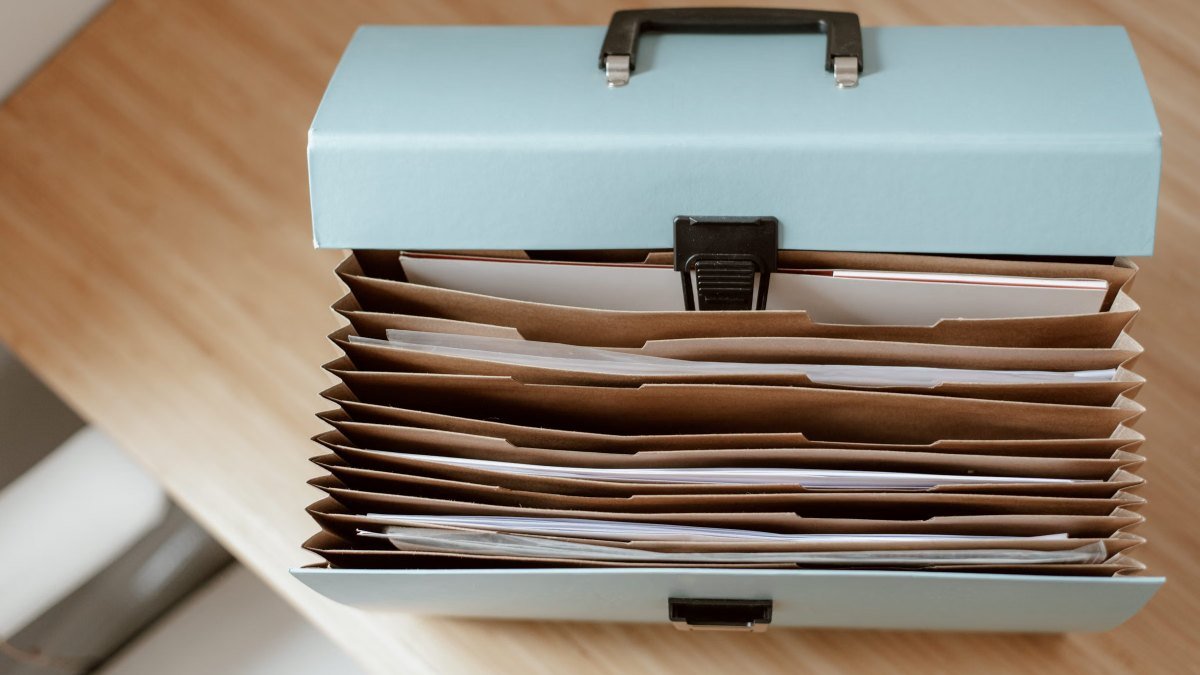
Where to put it all
Ready.gov suggests storing important documents in a safety deposit box, on an external drive, or in the cloud. The principle is simple: a copy stored only inside your house doesn’t help much if the emergency is the reason you can’t get back inside.
Our own suggestion, flagged as ours rather than federal guidance: pick two locations, and make one of them something you could reach from a borrowed device. A secure cloud copy gives you access if you have to leave home and can get online somewhere else. The same page cautions against sharing account numbers, Social Security numbers, or card numbers casually, so use an account with a strong, unique password — and make sure you can recover that account if your phone is lost, since a code sent to a missing phone is its own kind of locked door.
The cash question
Ready.gov recommends keeping a small amount of cash at home, specifically in small bills. The reasoning is worth stating directly: during a disaster, ATMs and credit cards may not work at the moment you need to buy supplies, fuel or food. Small bills matter because a cashier operating without power may not be able to make change for large ones.
How much is a judgment call, and we won’t invent a federal-sounding number for it. Our own starting point: think in terms of one tank of fuel plus two days of basic food for your household, in tens and twenties. Adjust it to your household size and where you live. Store it securely and separately from your everyday wallet — and not in the same box as your documents, since that concentrates everything valuable in one place.
More worth knowing
Confirm how your federal benefits arrive. If your household receives Social Security or other federal benefits, those payments are now electronic. The Social Security Administration states that as of September 30, 2025, federal law and Executive Order 14247 require federal benefits to be paid electronically, and that it has been completing the transition for remaining beneficiaries. The two routes are direct deposit to a bank account or the Direct Express prepaid debit card, and the agency notes a waiver can be requested through the U.S. Department of the Treasury in circumstances such as living somewhere without access to a financial institution. The preparedness step is making sure the account or card on file is current, and recording those details in your plan.
Emergencies attract scams. Ready.gov’s warnings are worth repeating in its own terms: the government, it says, will not call or text you about owing money or receiving economic impact payments, and will not contact you through social media about owing money or receiving payments. The practical version is to treat any unsolicited message asking for money or personal information after a disaster as suspect, verify through an official government number or website rather than a link you were sent, and report suspected fraud to the Federal Trade Commission.
Set a review date. Documents drift. Policies renew, doctors change, cards expire. Tying the review to something you already do once a year — filing taxes is the natural candidate, since you’re handling those records anyway — tends to work better than a reminder you’ll snooze.
Frequently asked questions
How long does it take to build one?
You can make real progress in an afternoon, though gathering everything can take longer depending on how scattered your records are. The kit’s own milestone — identification plus financial and legal documentation — is a reasonable first target.
Do I need an emergency fund before I do this?
No, and the order arguably runs the other way. Building the fund takes months. Building the plan costs nothing, so there’s no reason to wait for savings to reach a threshold before doing it.
Is a fireproof box at home enough?
It helps against fire, but it does not help if you evacuate without it or cannot get back into the house. That is the reasoning behind keeping a copy away from home as well — a safety deposit box, an external drive kept elsewhere, or cloud storage.
What if my partner handles all of our finances?
Then this becomes especially important for your household, and the contact sheet is the place to start. The test is simple: could the other adult pay the mortgage next month without asking anyone? If the answer is no, that gap is the plan’s real purpose.
Should the documents be originals or copies?
Keep originals secure and copies in the kit. You generally need the information — policy numbers, account details, physician contacts — faster than you need the physical paper, and copies can be stored in more than one place. Some situations may still require an original, so the originals need a known, secure home of their own.
The bottom line
A family financial emergency plan is among the least expensive financial tasks on your list, and one of the few that pays off entirely in the worst week of your life. It can cost nothing, and you can start building it this weekend. The fund is the long project; the plan is the one you can make real progress on today.
Start with the identification group and the contact sheet. Even those two steps can give your household a much better starting point.
Want more tips like these delivered to your inbox? Sign up below — you’ll also get our free grocery budget worksheet, and we only send stuff that’s actually useful.